

Fall can feel like a transition period on a construction site. Summer heat begins to fade, winter weather is still on the horizon, and crews are often focused on completing as much work as possible before colder conditions arrive.
But when it comes to construction site erosion control fall isn’t a season to coast.
Changing rainfall patterns, slower vegetation establishment, falling leaves and debris, fluctuating temperatures, and accelerated construction schedules can create a challenging combination for erosion and sediment control. At the same time, the window for establishing vegetation and completing stabilization work may be getting smaller by the week.
That makes fall an important time to reassess site conditions, maintain existing erosion control BMPs, and prepare vulnerable areas for the months ahead.
Register for a Virtual Lunch & Learn Session
Deepen your understanding of green infrastructure and explore the latest trends and innovations in the field. During this session industry experts will share valuable insights, practical tips, and real-world case studies.
Earn 1 PDH Credit.
Why Erosion Control Changes in the Fall
Erosion and sediment control plans are designed around site-specific conditions, but those conditions don’t remain static throughout a project. A BMP installed earlier in the construction season may have already experienced months of rainfall, sediment accumulation, equipment traffic, grading activity, and changing drainage patterns.
Then fall introduces another set of variables.
Vegetation growth begins to slow. Temperatures fluctuate. Leaves and organic debris accumulate. Rainfall can arrive on already disturbed or compacted soils. In colder climates, contractors also have to consider the approaching freeze-thaw cycle.
The result is a site that may behave very differently than it did during the summer.
Effective fall erosion control starts by recognizing those changes, and understanding the different roles of erosion control and sediment control, rather than assuming the controls installed earlier in the year will continue performing the same way.
1. Vegetation Has Less Time to Become Established
Vegetation is one of the most effective forms of long-term erosion control, but successful establishment depends heavily on timing.
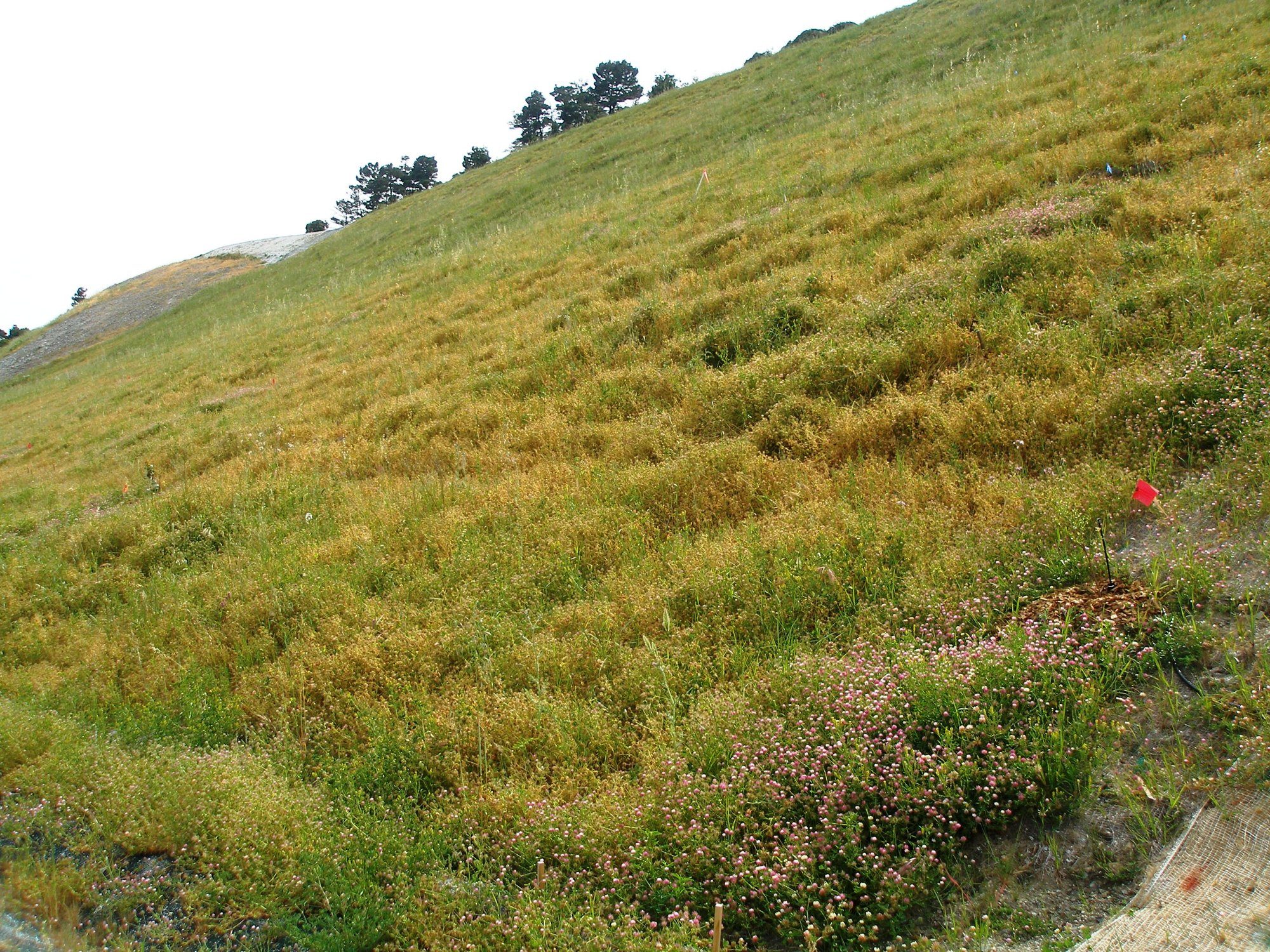
As temperatures drop and daylight decreases, plant growth slows. Seed placed late in the season may not have enough time to develop the root systems necessary to protect soil before winter weather arrives. That can leave recently graded slopes, stockpiles, drainage areas, and other disturbed soils exposed.
Instead of relying solely on vegetation, contractors may need additional stabilization measures to protect vulnerable areas while vegetation becomes established.
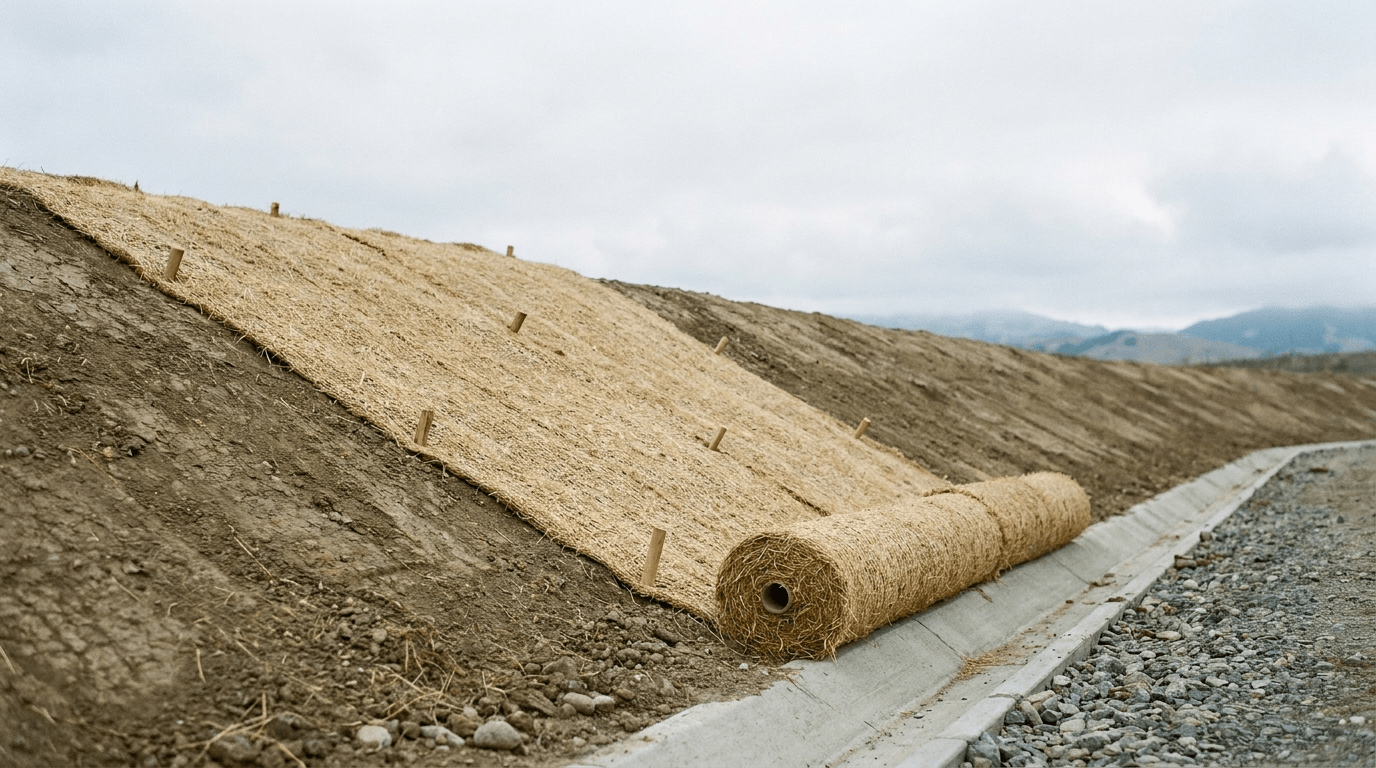
Rolled erosion control products for slope stabilization can help protect exposed soil from raindrop impact and surface runoff while supporting vegetation establishment. In more demanding applications, turf reinforcement mats (TRMs) can provide additional reinforcement where higher velocities or long-term performance are required.
The key is recognizing when vegetation alone may no longer provide sufficient protection before winter.
2. Fall Rain Can Expose Weak Points Quickly
A site that performed well during relatively dry summer conditions can look very different after several fall rain events.
Water follows the path of least resistance, and months of construction activity can change those paths significantly. New grades may redirect runoff. Equipment traffic can compact soil and create channels. Temporary access roads can influence drainage. Newly installed infrastructure can alter where water concentrates.
More unpredictable rainfall patterns are also changing how contractors, engineers, and site managers think about stormwater resilience and the ability of erosion control systems to perform under changing conditions.
Fall is therefore a good time to evaluate not just whether BMPs are still present, but whether they’re still positioned where the water is actually moving.
Look for signs such as:
- New rills or gullies developing on slopes
- Sediment accumulating behind perimeter controls
- Runoff bypassing existing BMPs
- Scour around outlets or drainage areas
- Sediment reaching storm drains
- Areas where concentrated flow has developed
These aren’t simply maintenance issues. They can indicate that site hydrology has changed and the erosion and sediment control strategy needs to change with it.

3. Leaves and Debris Can Change How BMPs Perform
Falling leaves aren’t usually the first thing contractors think about when discussing sediment control, but organic debris can have a meaningful impact on drainage systems.
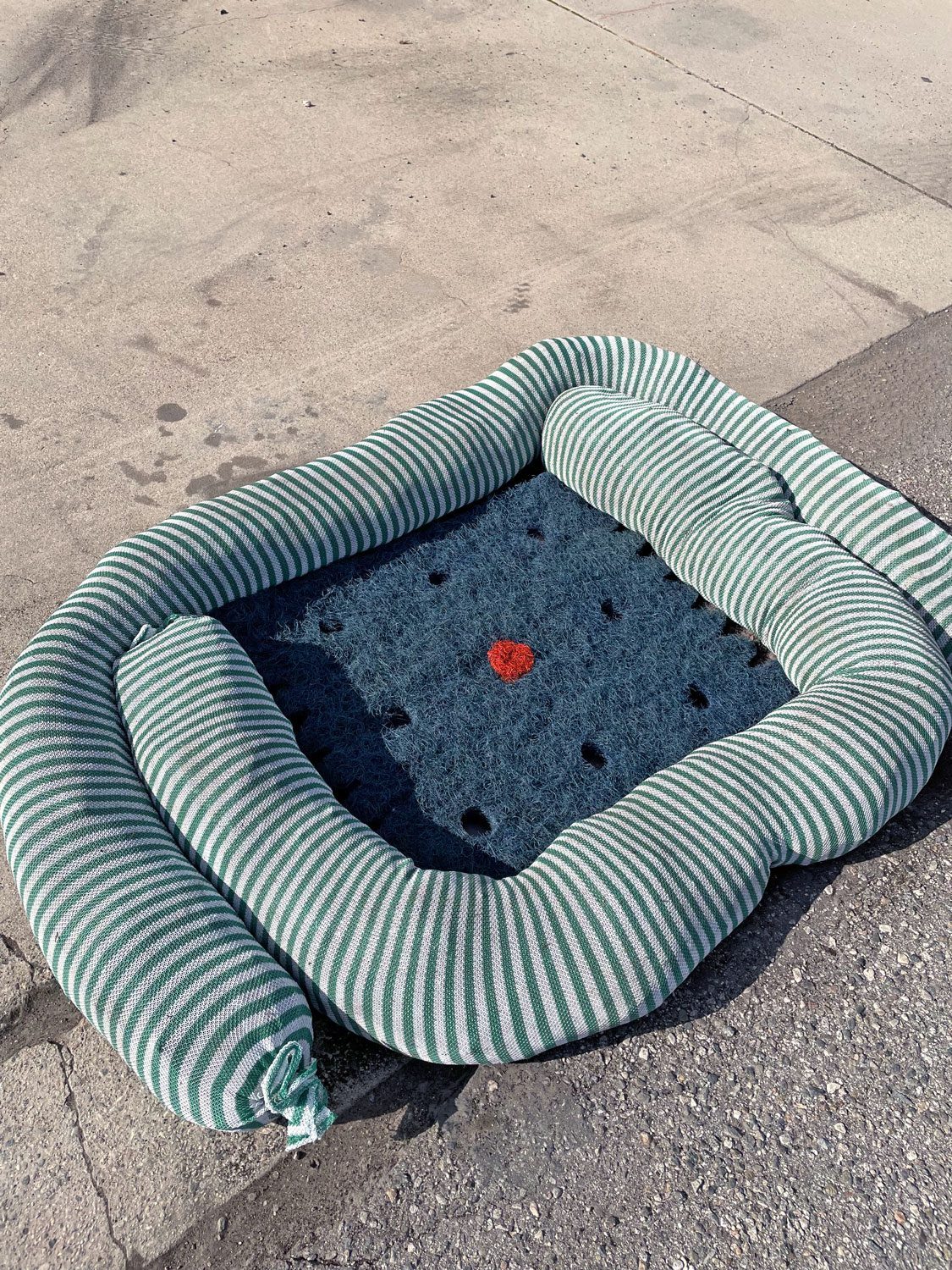
Leaves, sticks, trash, and other debris can accumulate around curb inlets, catch basins, drainage structures, and sediment control BMPs. As debris builds up, water may begin to pond or find another path around the obstruction. That can create unexpected runoff patterns and potentially move sediment into areas that were previously protected.
Inlet protection therefore deserves particular attention during fall inspections.
Solutions such as MKB’s BlackHawk Inlet Filter Mat are designed to capture sediment while allowing stormwater to enter drainage infrastructure. Regardless of the inlet protection system being used, however, routine inspection and maintenance remain essential. A well-designed BMP can only perform as intended when water can reach and pass through it appropriately.
4. Existing Sediment Controls May Be Carrying a Season's Worth of Material
Fall isn’t always about installing new erosion control BMPs. Sometimes the most important work is maintaining what’s already there.
Perimeter controls and sediment barriers may have spent spring and summer capturing material from multiple storm events. As sediment accumulates, the effective capacity of those systems can decrease.
That makes fall an ideal time for a comprehensive BMP inspection.
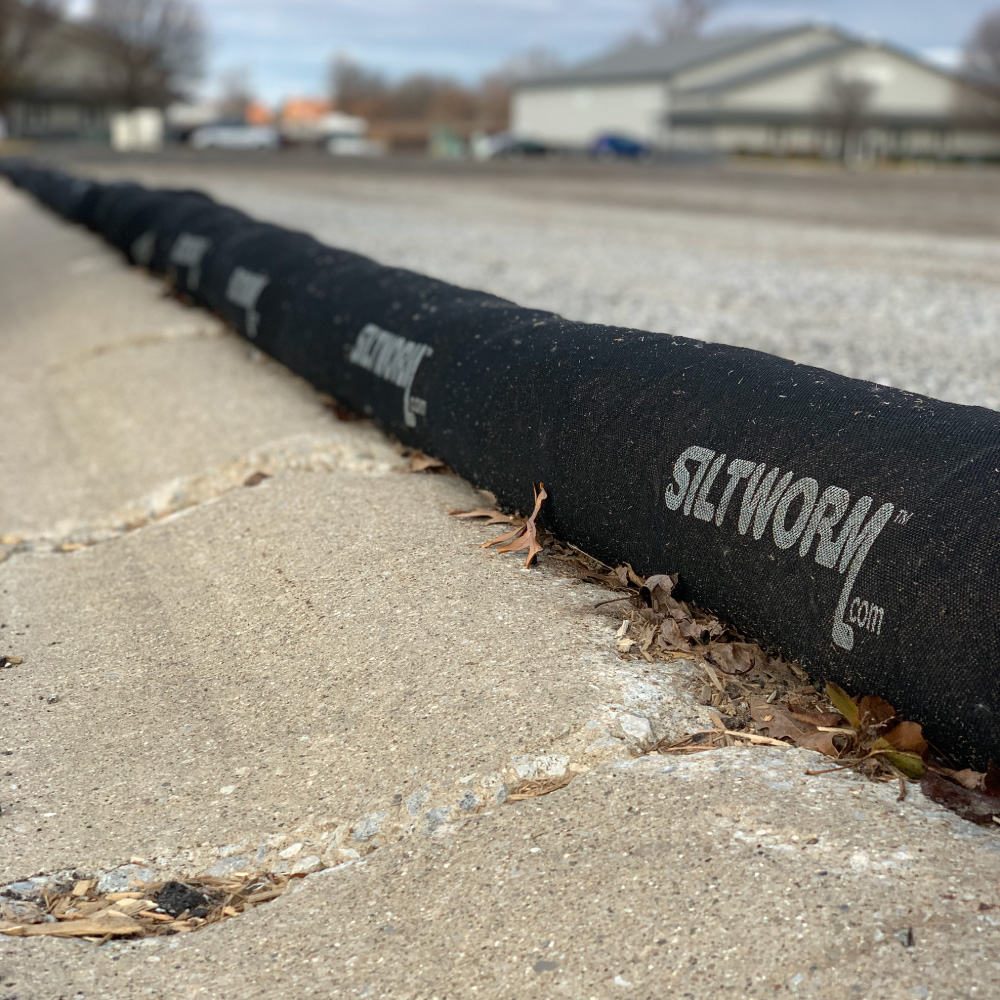
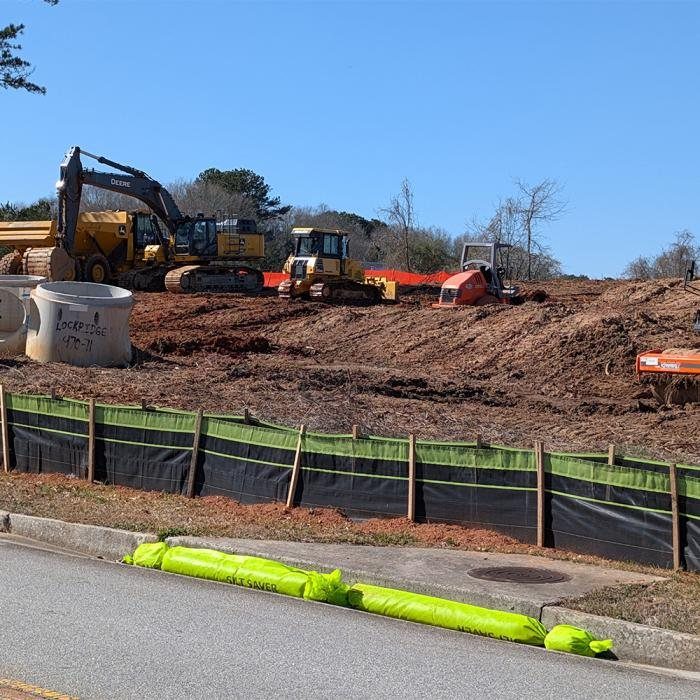
Check your SiltSoxx, silt fence, wattles, sediment barriers, and other perimeter controls for accumulated sediment, undercutting, overtopping, damaged sections, displacement, or evidence that runoff is bypassing the system. Sediment should be removed according to the project’s requirements before accumulation compromises performance.
This is also an opportunity to ask a broader question: Is the existing BMP still appropriate for the amount and type of runoff reaching it?
If grading or drainage patterns have changed significantly since installation, maintenance alone may not be enough.
5. Controlling Water Before It Gains Momentum Becomes Even More Important
One of the most effective ways to manage sediment is to prevent runoff from gaining enough energy to move large amounts of soil in the first place. That becomes particularly important on long slopes and heavily disturbed areas heading into fall and winter.
Rather than relying exclusively on perimeter controls to capture sediment after it has traveled across the site, contractors can use a layered approach that addresses runoff closer to its source.
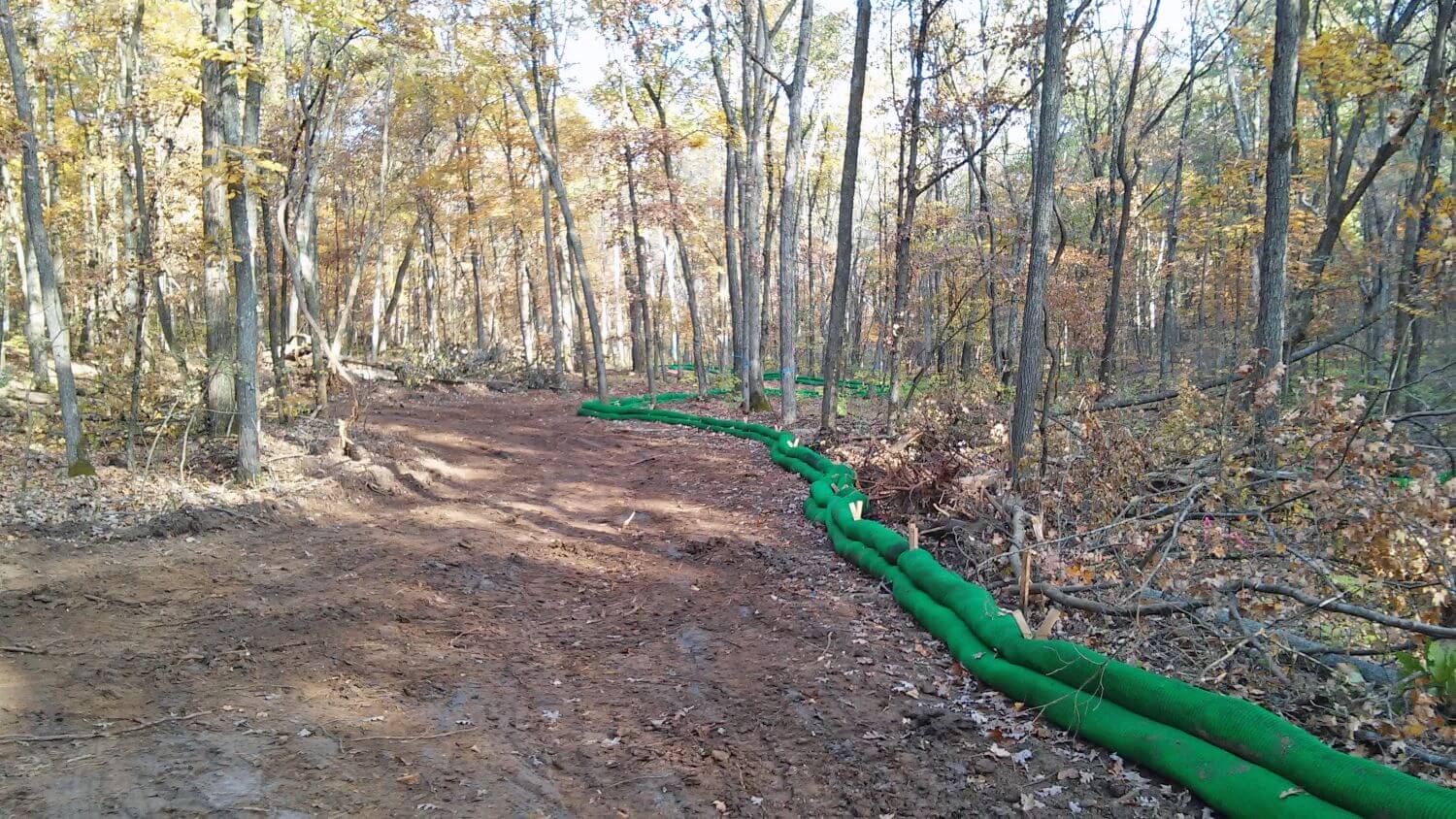
A runoff diversion solution such as MKB’s DiversionSoxx can be used in appropriate applications to intercept and redirect runoff. Slope interruption practices can help break long flow paths into shorter sections, reducing the opportunity for water to gain velocity.
This approach reinforces an important principle of construction site erosion control: Don’t just plan for where sediment ends up. Manage the water that’s moving it.
6. Colder Weather Can Limit Your Options
Waiting until winter arrives to address erosion problems can make corrective work more difficult.
Frozen or saturated soils can complicate grading and stabilization. Vegetation establishment becomes more challenging. Snowmelt and freeze-thaw cycles may create additional runoff and erosion concerns. Some projects may also become harder to access with heavy equipment once winter conditions arrive.
Fall therefore provides an important preparation window.
Contractors should identify areas likely to remain disturbed through winter and determine what protection they’ll need before conditions deteriorate.
Depending on the site, that could include:
- Stabilizing exposed slopes
- Installing or reinforcing perimeter sediment controls
- Protecting drainage structures
- Interrupting long runoff paths
- Stabilizing construction entrances
- Preparing stockpiles for winter
- Repairing erosion before freeze-thaw conditions worsen it
The objective isn’t simply to make it through the next storm. It’s to leave the site prepared for an entire season of changing conditions. Addressing vulnerabilities before winter can also help reduce the cost of erosion control failures, including rework, cleanup, material replacement, additional labor, and schedule disruptions.

7. End-of-Year Schedule Pressure Can Increase Risk
Fall often brings another challenge that has nothing to do with weather: the calendar.
Projects may be pushing toward major milestones before winter. Developers may want areas completed before year-end. Contractors may be trying to finish grading, utilities, paving, or vertical construction while conditions remain favorable. That urgency can mean more soil disturbance at exactly the time when natural stabilization is becoming harder to establish.
Temporary stabilization and erosion control BMPs shouldn’t become secondary priorities as schedules tighten. In fact, the opposite is true.
The faster site conditions change, the more important it becomes to reassess runoff paths, disturbed acreage, stabilization needs, and sediment controls. A BMP plan created months earlier should not become a substitute for evaluating what’s actually happening on the ground today.
A Fall Erosion Control Checkup
Before winter conditions arrive, contractors and site managers should perform a thorough review of their erosion and sediment control system.
Walk the site after a rainfall event whenever possible. Follow the water rather than simply checking boxes on an inspection form.
Where is runoff originating?
Where is it concentrating?
Where is sediment accumulating?
Which areas are beginning to erode?
Are existing controls still positioned correctly?
Are recently disturbed areas sufficiently stabilized?
Looking at the site as a connected system can reveal problems that may not be obvious when individual BMPs are inspected in isolation.
Prepare the Site Before Winter Tests It
Fall creates a narrow but valuable window between the demands of summer construction and the challenges of winter. Using that time strategically can help contractors reduce erosion, control sediment, protect drainage infrastructure, support vegetation establishment, and avoid preventable repairs later in the season.
Preparing for winter starts before winter arrives. Contact MKB to evaluate your site’s erosion and sediment control needs and identify the right solutions for the season ahead.