

Green infrastructure isn’t just an environmental buzzword; it’s a real, working solution on active construction sites. Engineers, designers, and contractors are increasingly turning to vegetated systems that manage stormwater, stabilize soils, and support vegetation without heavy civil structures. On busy jobsites, these solutions can deliver performance plus sustainability, fitting naturally into erosion control, runoff filtration, and long-term site stability plans.
In this article, we walk through how green infrastructure products like GroSoxx and GreenLoxx perform in real-world construction settings, and where they make the most sense when embedded in a broader sediment and stormwater strategy.
Register for a Virtual Lunch & Learn Session
Deepen your understanding of inlet protection and explore the latest trends and innovations in the field. During this session industry experts will share valuable insights, practical tips, and real-world case studies.
Earn 1 PDH Credit.
What Green Infrastructure Looks Like on Construction Sites
Green infrastructure in construction means systems that use natural processes, such as vegetation, soils, and compost media, to manage water and erosion. These systems:
- Filter stormwater
- Reduce velocity of runoff
- Promote rapid vegetation establishment
- Provide durable erosion protection
Unlike rigid concrete or heavy armoring, they adapt to natural terrain, support ecological outcomes, and often help job sites meet regulatory goals for water quality and habitat enhancement.
GroSoxx: Practical Jobsite Applications for Vegetated Stormwater Control
GroSoxx is a vegetated compost filter sock designed to stabilize soil and manage stormwater on active construction sites. Filled with engineered growing media, it functions as a living BMP, combining filtration, flow control, and vegetation establishment in areas where runoff, erosion, and water quality must be addressed simultaneously.
Rather than serving a single purpose, GroSoxx adapts to changing site conditions, making it a flexible green infrastructure solution throughout construction and stabilization.
Where GroSoxx Performs on Active Sites
- Bioswales & Vegetated Conveyance Areas
GroSoxx integrates into bioswales and vegetated channels where runoff must be slowed, filtered, and infiltrated. These systems are especially effective during first-flush storm events and continue to manage ongoing flows. Common applications include roadways, site perimeters, and buffer zones where runoff must be treated before entering downstream systems. Media and additives can be tailored to meet site-specific water quality requirements. - Channel Beds & Concentrated Flow Paths
In areas where stormwater is conveyed or concentrated, GroSoxx functions as a flexible soft-armoring system for channel beds and banks. It provides erosion resistance, structural stability, and vegetation reinforcement under elevated velocities and hydraulic stresses, maintaining performance where turf mats, riprap, or cellular confinement systems may be less effective. Typical applications include drainage channels and transitional flow paths. - Vegetated Gabions & Structural Transitions
GroSoxx can be used to create vegetated gabion systems that combine the strength of hard armor with the adaptability of soft armor. These systems stabilize shorelines, streambanks, embankments, and outfalls while supporting seeded or live-stake vegetation in areas exposed to concentrated flow and high hydraulic forces.
Why GroSoxx Works During Construction
GroSoxx performs well on active jobsites because it delivers erosion control, stormwater treatment, and vegetation establishment in a single system. Its flexible form allows it to conform to uneven terrain, while weighted and anchored installations provide stability under changing flow conditions. As vegetation establishes, GroSoxx systems continue to strengthen, thus reducing maintenance demands and improving long-term performance without interrupting construction sequencing.
GreenLoxx: Vegetated Walls & Slopes for Erosion Protection
GreenLoxx extends green infrastructure beyond surface treatments into structural applications, providing a vegetated alternative for slopes, shorelines, and grade changes that traditionally rely on hard armor. By integrating GroSoxx-filled facings with geogrid reinforcement, these systems create stable, erosion-resistant surfaces that adapt to site conditions while supporting long-term vegetation.
Where GreenLoxx Performs on Active Sites
GreenLoxx vegetated wall, slope, and shore systems are designed to perform in the challenging terrain and high-stress environments common on active construction and restoration projects. With multiple configurations available, GreenLoxx accommodates a wide range of slope conditions, from moderate grades to near-vertical applications, while maintaining structural integrity and vegetated stability.
- Steep Slopes & Banks
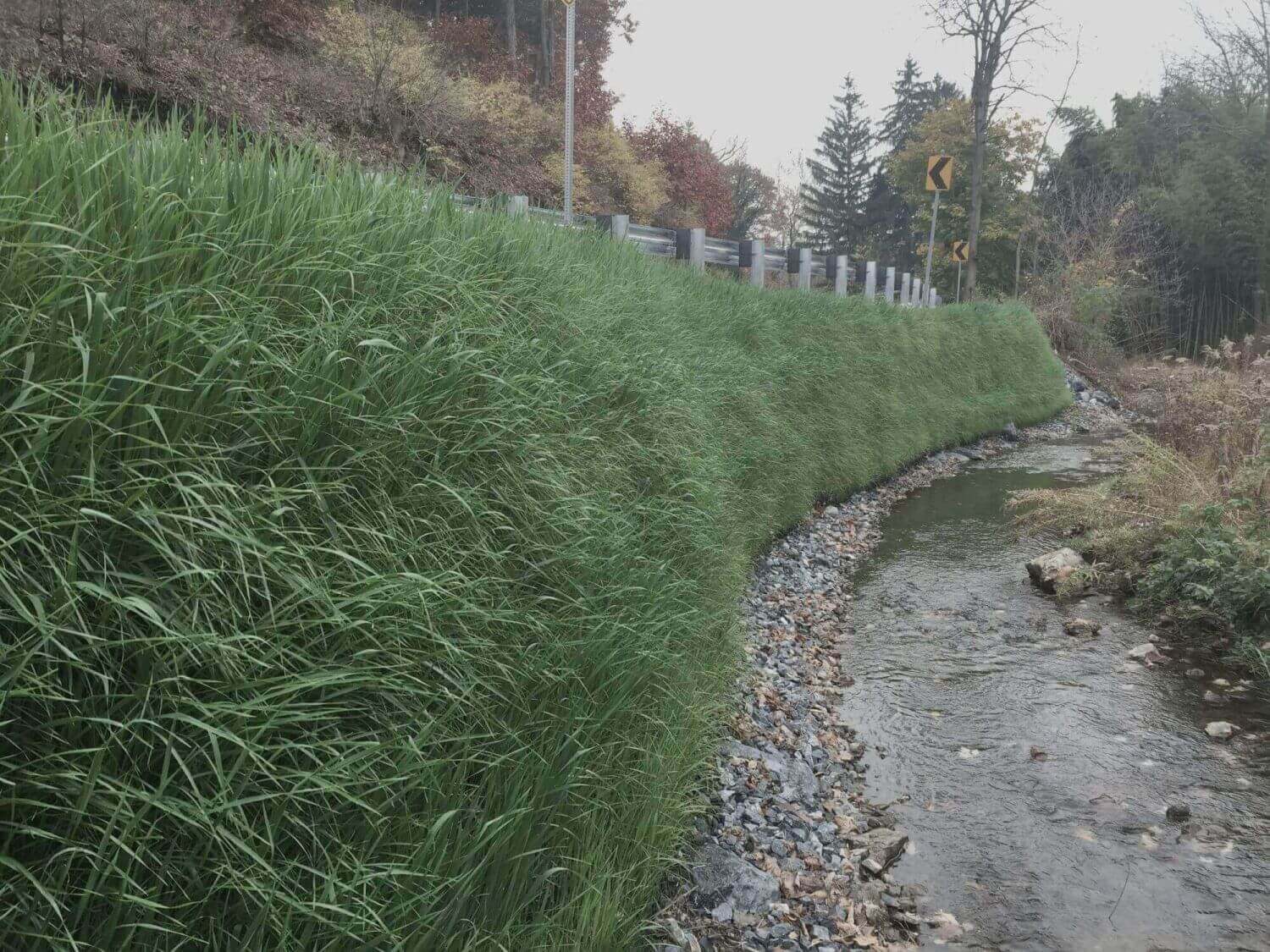
GreenLoxx systems protect exposed slope faces and embankments from erosion across a range of grades. Vegetated Slope Facing (VSF) applications are typically used on slopes up to 60°, while Reinforced Soil Slope (RSS) and Mechanically Stabilized Earth (MSE) systems support steeper slopes (up to 90°) where structural reinforcement and land recovery are required. - Streambanks & Riparian Areas
In flowing water environments, GreenLoxx provides erosion resistance where hydraulic forces can undermine unprotected banks. Vegetated facings integrate with surrounding landscapes, supporting habitat-friendly stabilization while maintaining structural performance. - Shorelines & Pond Edges
Along shorelines and detention ponds, GreenLoxx protects against wave action, fluctuating water levels, and overtopping. Vegetation establishes directly within the system, improving long-term bank stability without the use of concrete or block walls. - Roadside Slopes & Outfalls
GreenLoxx is well suited for transportation corridors where space is limited and stormwater performance is critical. Living wall and slope systems stabilize roadside embankments and outfall areas while supporting drainage and visual integration. - Retaining Walls & Grade Transitions
GreenLoxx MSE and RSS systems provide vegetated alternatives to conventional retaining walls, allowing projects to manage severe grade changes, regain usable land, and maintain flexibility during construction.
Why GreenLoxx Works During Construction
GreenLoxx is designed to address erosion and stability challenges in areas where traditional surface BMPs are no longer sufficient, but full concrete or block walls are unnecessary or undesirable. By combining vegetated GroSoxx facings with integrated geogrid reinforcement, GreenLoxx creates a mechanically stabilized, free-draining system that supports both structural performance and vegetation establishment across a range of site conditions.
On active construction sites, GreenLoxx performs effectively because:
- Lightweight components and modular installation reduce site disturbance and simplify handling
- Minimal base preparation is required for many configurations compared to conventional retaining walls
- Geogrid reinforcement paired with vegetated GroSoxx provides reliable soil retention under concentrated runoff and hydraulic stress
- Vegetation grows through the facing, anchoring soils and improving long-term stability as roots penetrate the structure
- Free-draining design limits hydrostatic pressure behind the vegetated surface
When incorporated into a project’s stormwater and sediment control plan, GreenLoxx provides engineers with a practical, vegetated alternative to conventional retaining systems while also supporting performance and environmental goals without disrupting construction schedules.
Where These Systems Fit Best on Active Jobsites
Green infrastructure is most effective when used in strategic locations, such as:
Areas with Extended Exposure – When sites will remain bare or disturbed for weeks, vegetated systems like GroSoxx offer both filtration AND stabilization instead of temporary barriers alone.
Near Sensitive Environmental Features – Along streams, wetlands, and buffer zones, vegetated systems reduce the environmental footprint of construction while enhancing water quality outcomes.
Long-Term Stability Zones – For reshaping slopes or facing retaining structures, GreenLoxx provides sustainable protection that grows stronger over time as plants mature.
Getting the Most from Green Infrastructure in 2026
Engineers and contractors are turning toward green infrastructure not because it’s trendy, but because it delivers measurable performance on active jobsites. Systems like GroSoxx and GreenLoxx help manage runoff, reduce erosion, and support vegetation, all while fitting into tight schedules and evolving site conditions.
By understanding where these products perform best and how to integrate them with proven BMPs, you’ll be well-positioned to meet both regulatory expectations and project performance goals in 2026 and beyond.
Want help specifying green infrastructure for your next project? Contact MKB’s team to explore detailed product specs, installation guidance, and design support tailored to your jobsite needs.