

Most jobsites don’t fail because they used the wrong stormwater product. They fail because they treated stormwater management as a procurement decision instead of a performance strategy.
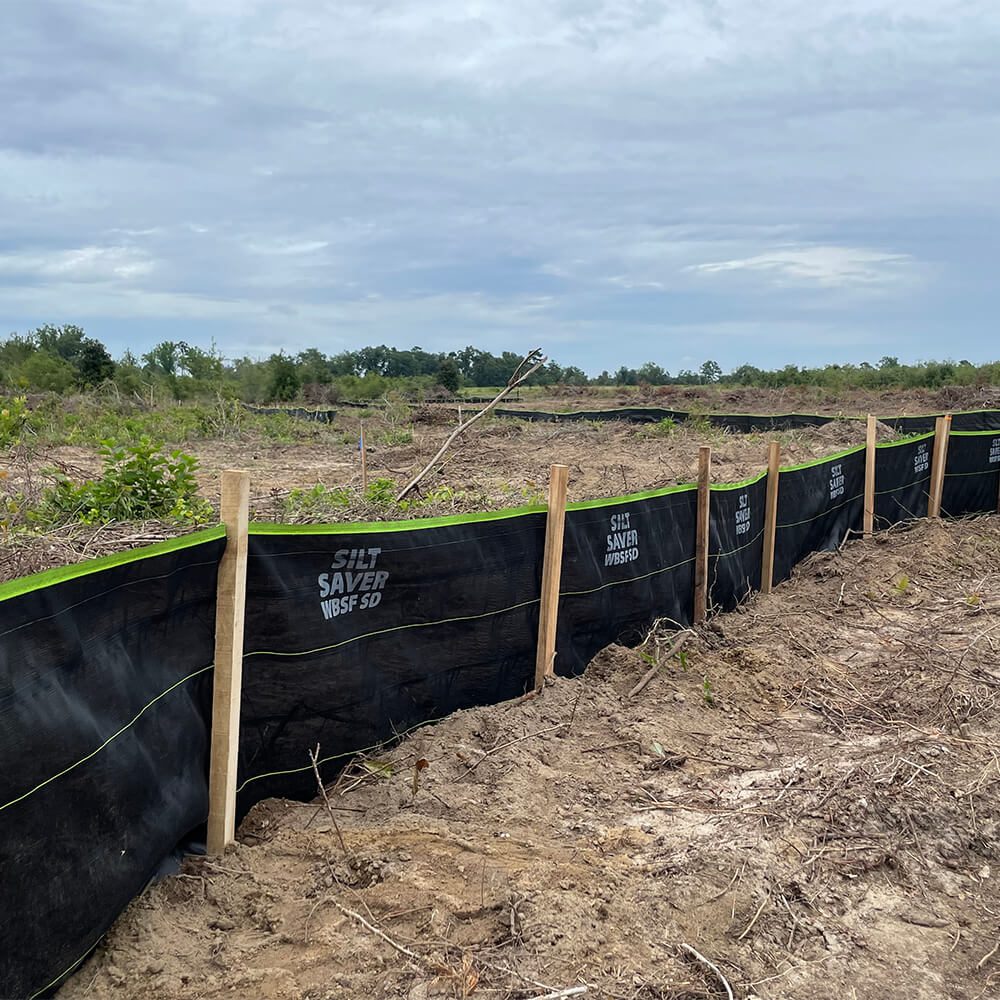
A silt fence gets installed.
An inlet protection device goes in.
Maybe a blanket gets thrown on a slope.
Everything is technically “there.” And yet after the first major rain event:
- Sediment moves
- Water bypasses controls
- Inlets clog or fail
- Inspectors start documenting deficiencies
The issue isn’t the presence of products. It’s the absence of a coordinated system built around how water actually behaves on the site.
Register for a Virtual Lunch & Learn Session
Deepen your understanding of green infrastructure and explore the latest trends and innovations in the field. During this session industry experts will share valuable insights, practical tips, and real-world case studies.
Earn 1 PDH Credit.
Understanding Stormwater Behavior Before Selecting Products
Before selecting stormwater management products, high-performing teams start with one question: How is water going to move across this site?
Stormwater doesn’t care about your plan set—it follows:
- Slope and grade
- Soil type and compaction
- Disturbance patterns
- Rain intensity and duration
On active construction sites, runoff tends to:
- Accelerate quickly on exposed slopes
- Concentrate in low points and channels
- Carry both visible sediment and dissolved pollutants
- Overwhelm controls that aren’t designed for peak conditions
This is why product selection has to align with runoff behavior, not just spec language.
The Four Functional Roles of Stormwater Management Products
Every effective stormwater system is built by combining products that serve four distinct roles. Not understanding these roles is where most systems break down.
1. Source Control: Keeping Soil Where It Belongs
If soil doesn’t move, everything downstream becomes easier. Source control products are designed to stabilize exposed areas immediately, reducing the amount of sediment entering the system. These include:
- Erosion control blankets (ECBs)
- Turf reinforcement mats (TRMs)
- Geotextiles for stabilization and separation
But the key isn’t just using them, it’s when and where they’re deployed. High-performing sites:
- Stabilize soil as it is disturbed, not weeks later
- Match product type to slope angle and flow potential
- Reinforce areas expected to see repeated runoff
Waiting too long to stabilize is one of the most expensive mistakes on a jobsite.
Flow Control: Managing Energy Before It Becomes Damage
Water becomes destructive when it gains speed and concentrates. Flow control products are used to:
- Slow runoff velocity
- Break up flow paths
- Redirect water to controlled areas
Common solutions include:
- Check dams
- Runoff Diversion BMPs
- Compost filter socks used as slope interruption
This is one of the most underutilized strategies on jobsites. Instead of letting water build momentum across a slope or through a channel, effective systems:
- Interrupt flow at intervals
- Spread water laterally
- Reduce its ability to transport sediment
Without flow control, downstream products are forced to do more than they were designed for.
Sediment Control: Capturing What Escapes
Even with strong upstream controls, some sediment will move. Sediment control products are designed to capture and contain it before it leaves the site. These include:
But performance depends heavily on:
- Proper placement (not just perimeter-only thinking)
- Installation quality
- Maintenance after storm events
Too often, sediment control is treated as the primary solution instead of a secondary safeguard. When that happens, systems get overloaded quickly.
4. Filtration: Addressing What You Can’t See
Modern stormwater compliance isn’t just about visible sediment. Regulators are increasingly focused on:
- Fine particles
- Nutrients like nitrogen and phosphorus
- Hydrocarbons and heavy metals
Filtration products are designed to address these challenges. These include:
- Advanced filtration systems
- Inlet protection with engineered media
- Pollutant filter socks with targeted blends
This is where stormwater management is evolving fastest. Sites that only control sediment are often missing a large portion of the water quality equation.
Where Stormwater Systems Break Down on Real Jobsites
Even well-designed plans can fail in execution.
The most common breakdowns include:
1. Over-Reliance on Perimeter Controls – Trying to stop everything at the edge of the site instead of controlling it upstream.
2. Delayed Stabilization – Leaving exposed soil vulnerable for too long during active phases of construction.
3. Ignoring Flow Paths – Failing to account for how water concentrates and accelerates across the site.
4. Lack of Maintenance – Stormwater systems are dynamic. Without inspection and repair, performance degrades quickly.
5. Product Mismatch – Using solutions that don’t align with slope, soil type, or expected flow conditions.
These aren’t product failures, but rather system design and execution failures.
Designing a Stormwater Management System That Performs
High-performing sites follow a layered, strategic approach:
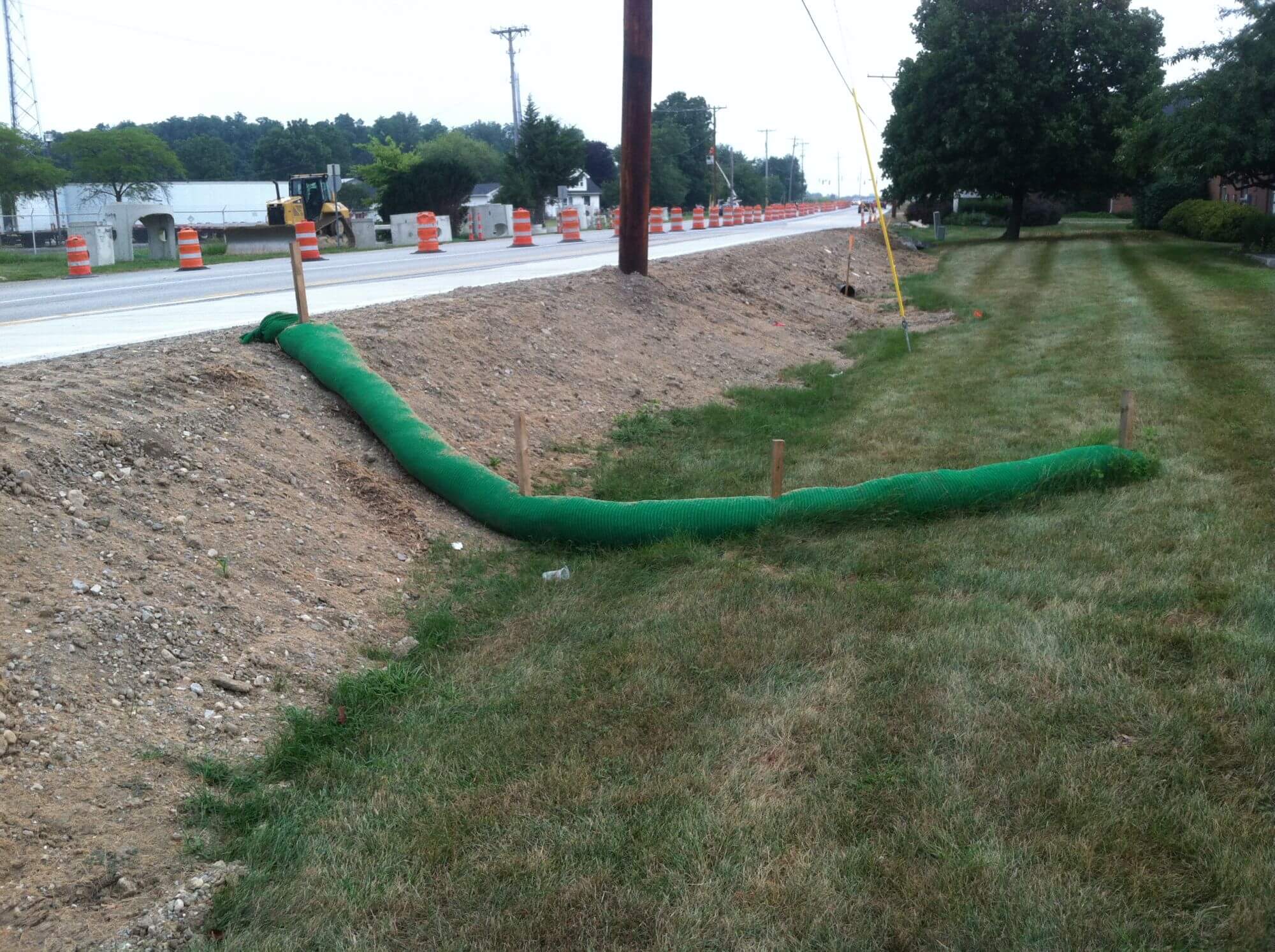
Control at the Source- Stabilize disturbed soil immediately to reduce sediment generation.
Interrupt and Manage Flow – Use slope interruption and channel controls to reduce runoff energy.
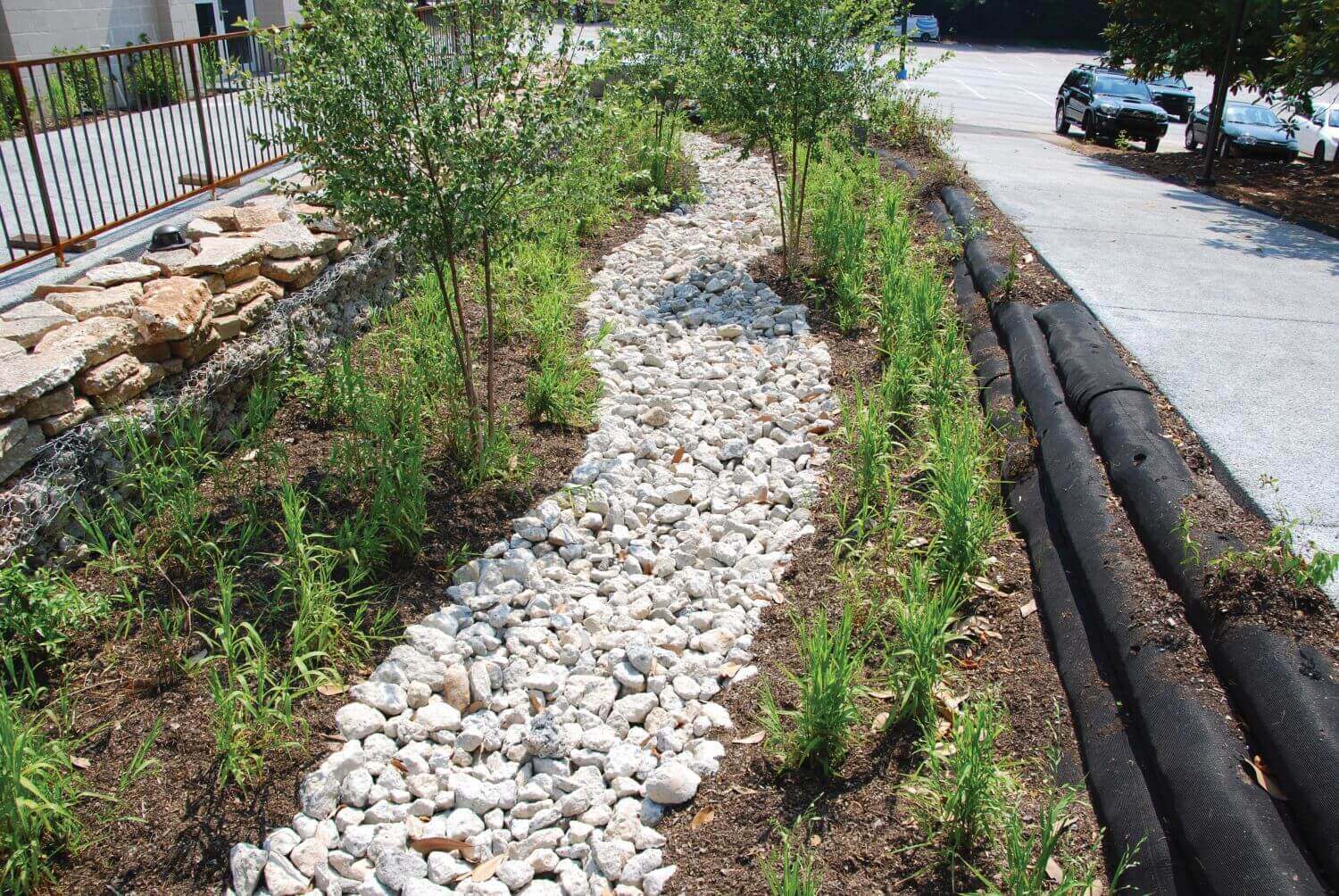
Capture Sediment in Stages – Don’t rely on one control point, but use multiple lines of defense.
Filter Before Discharge – Incorporate filtration where water exits the site or enters infrastructure.
Maintain Continuously- Inspect after storm events and adjust as site conditions evolve.
This approach turns stormwater management from a reactive process into a controlled system.
Selecting Stormwater Management Products for Real-World Conditions
Spec sheets don’t build jobsites, conditions do. Selecting the right stormwater management products requires looking beyond theoretical performance and focusing on how solutions will hold up under real-world pressure. Installation speed and labor impact matter when crews are moving fast. Performance under changing weather conditions matters when rain doesn’t follow the schedule. Durability matters across the full project lifecycle, not just during initial install. And just as important, products must adapt to evolving site conditions and work seamlessly with other controls already in place.
This is where many systems fall short. Products that perform in ideal conditions often struggle when timelines tighten, weather shifts unexpectedly, or runoff behaves differently than anticipated. That reality is driving a broader shift across the industry. Stormwater management is no longer approached as a collection of isolated BMPs, but as an integrated system built to handle real-world variability. Increased regulatory pressure, more complex site designs, heightened focus on water quality, and growing owner expectations for long-term performance are all pushing teams in this direction.
As a result, stormwater management products are no longer standalone tools. They are interconnected components within a larger system, and their effectiveness depends on how well they function together under actual jobsite conditions, not just how they perform on paper.
Build a System That Works Beyond the Plan Set
If your current approach focuses on individual products instead of system performance, there’s an opportunity to improve:
- Compliance outcomes
- Installation efficiency
- Long-term site stability
MKB works with contractors, engineers, and developers to deliver stormwater management products that are designed to function as a complete system, from erosion control and sediment containment to advanced filtration and green infrastructure.
We recognize that every jobsite has different challenges:
- Soil conditions
- Slopes and drainage patterns
- Regulatory requirements
- Project timelines
The right stormwater management system accounts for all of them.
Contact MKB today to identify the right combination of stormwater management products for your project, and build a system that performs in real-world conditions.