

Steep slopes create some of the most demanding erosion control conditions on construction sites. As slope grades increase, so does runoff velocity, hydraulic stress, soil instability, and the risk of sediment transport. During heavy rainfall events, unmanaged slopes can quickly become major sources of erosion, threatening downstream waterways, damaging infrastructure, overwhelming stormwater systems, and creating costly compliance issues.
For contractors, engineers, DOTs, municipalities, and developers, effective slope stabilization is no longer just about temporary erosion control. It requires integrated systems capable of performing under changing field conditions throughout the life of a project.
That’s why modern slope stabilization strategies increasingly combine rolled erosion control products (RECPs), slope interruption systems, geotextiles, turf reinforcement mats, and reinforced vegetated stabilization solutions designed to work together.
Register for a Virtual Lunch & Learn Session
Deepen your understanding of green infrastructure and explore the latest trends and innovations in the field. During this session industry experts will share valuable insights, practical tips, and real-world case studies.
Earn 1 PDH Credit.
Why Steep Slopes Are Difficult to Stabilize
Slope failures are rarely caused by a single issue. More often, erosion develops when multiple site conditions combine at the same time. Long uninterrupted slopes allow runoff to accelerate as it travels downhill, increasing erosive force and making exposed soils more vulnerable to rill erosion, gully formation, sediment transport, and slope instability.
These challenges become even more severe during intense storm events, extended rainfall periods, freeze-thaw cycles, or active construction phases where vegetation has not yet been fully established.
As runoff velocity increases, many traditional BMPs begin struggling to perform as intended. That’s why steep slope stabilization typically requires more than a single erosion control product.
Effective Slope Stabilization Requires Layered Systems
One of the most common mistakes on steep construction sites is attempting to manage every condition with a single BMP.
In reality, successful slope stabilization depends on layered systems that address multiple challenges simultaneously, including surface erosion, runoff velocity, soil reinforcement, drainage performance, and long-term vegetation establishment.
Integrated systems allow BMPs to complement one another instead of operating independently. This creates more resilient erosion control strategies capable of adapting to changing site conditions and increasing hydraulic stress throughout the project lifecycle.
The Role of RECPs and Turf Reinforcement Mats
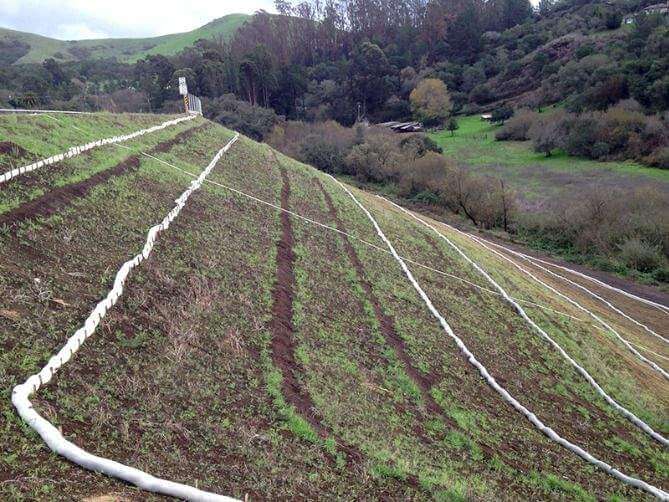
Rolled erosion control products are often one of the first lines of defense on steep slopes. These systems help stabilize disturbed soils, reduce raindrop impact, minimize surface erosion, and support vegetation establishment during vulnerable early growth stages.
Depending on site conditions, projects may utilize straw blankets, coconut blankets, excelsior blankets, or turf reinforcement mats. Product selection is influenced by factors such as slope gradient, slope length, anticipated flow velocity, vegetation goals, and overall project duration.
On slopes experiencing concentrated flow or recurring hydraulic stress, turf reinforcement mats often provide additional long-term reinforcement beyond what temporary blanket systems can deliver alone. These systems help reinforce root zones while providing ongoing erosion resistance after vegetation becomes established.
Turf reinforcement mats are especially valuable in drainage channels, utility corridors, steep embankments, shorelines, and other areas exposed to high-velocity stormwater flow.
Why Slope Interruption Is Critical
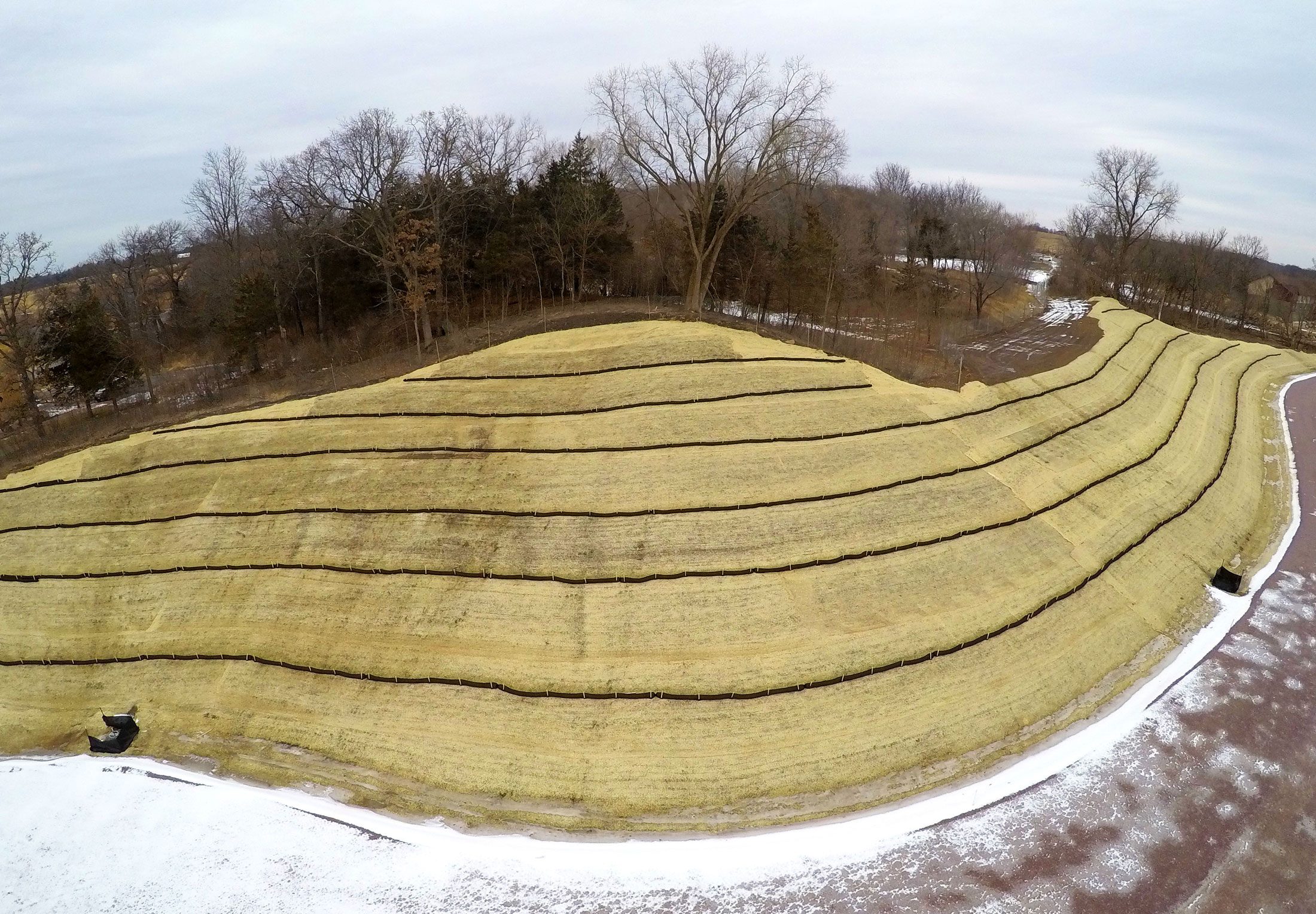
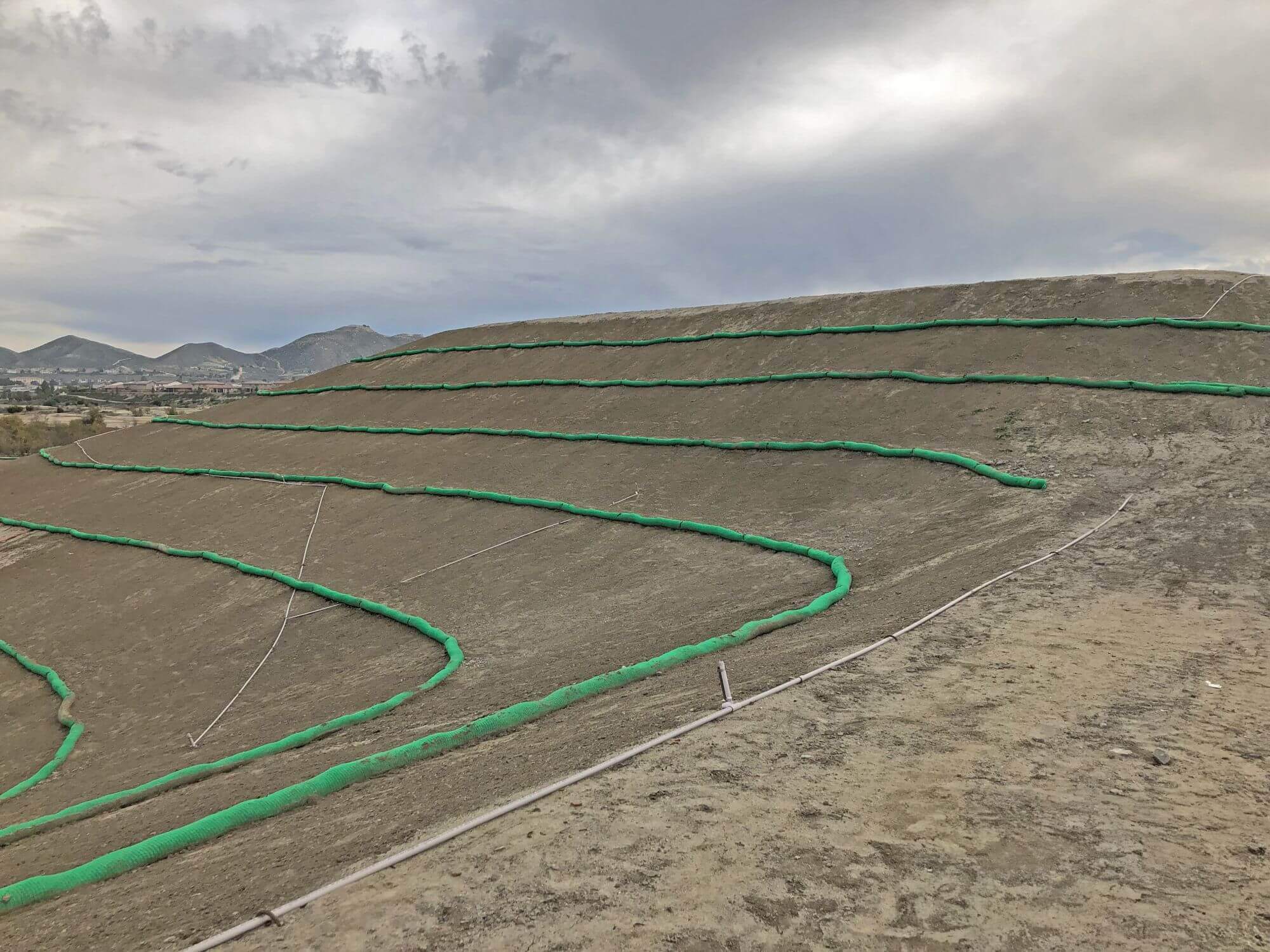
One of the most effective ways to reduce erosion on steep slopes is to interrupt runoff before it gains excessive velocity.
Without interruption, water accelerates downhill and increases hydraulic force across the slope face. Over time, this concentrated flow can overwhelm stabilization systems and create progressive erosion issues.
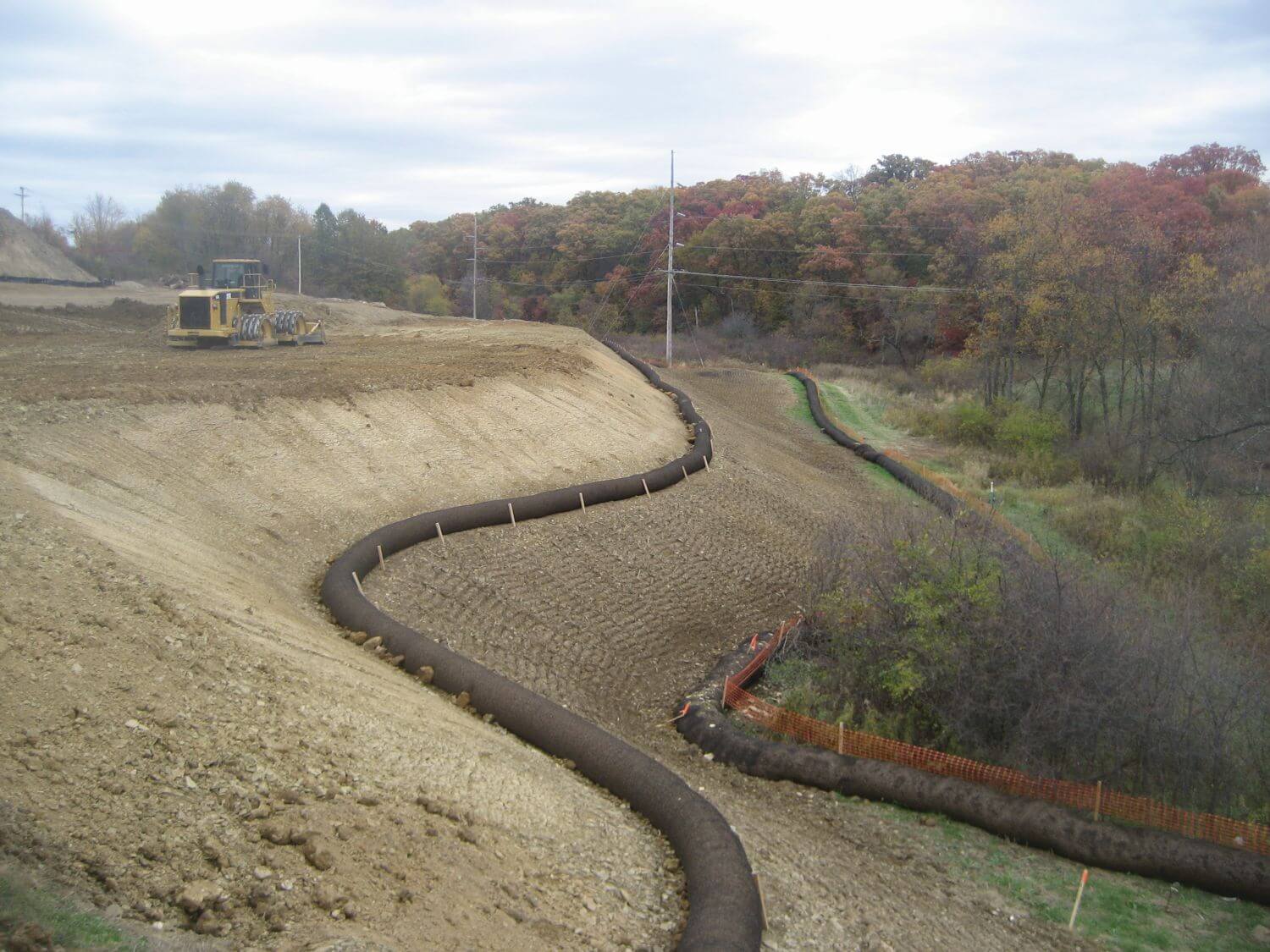
Slope interruption strategies help reduce runoff energy by slowing, diverting, or dispersing water before concentrated flow develops. Compost filter socks, diversion berms, and straw wattles can all help reduce slope length and improve runoff management. These systems not only slow runoff velocity, but also help promote infiltration, minimize sediment transport, and reduce the likelihood of rill and gully formation during major storm events.
Geotextiles and Reinforced Stabilization Systems
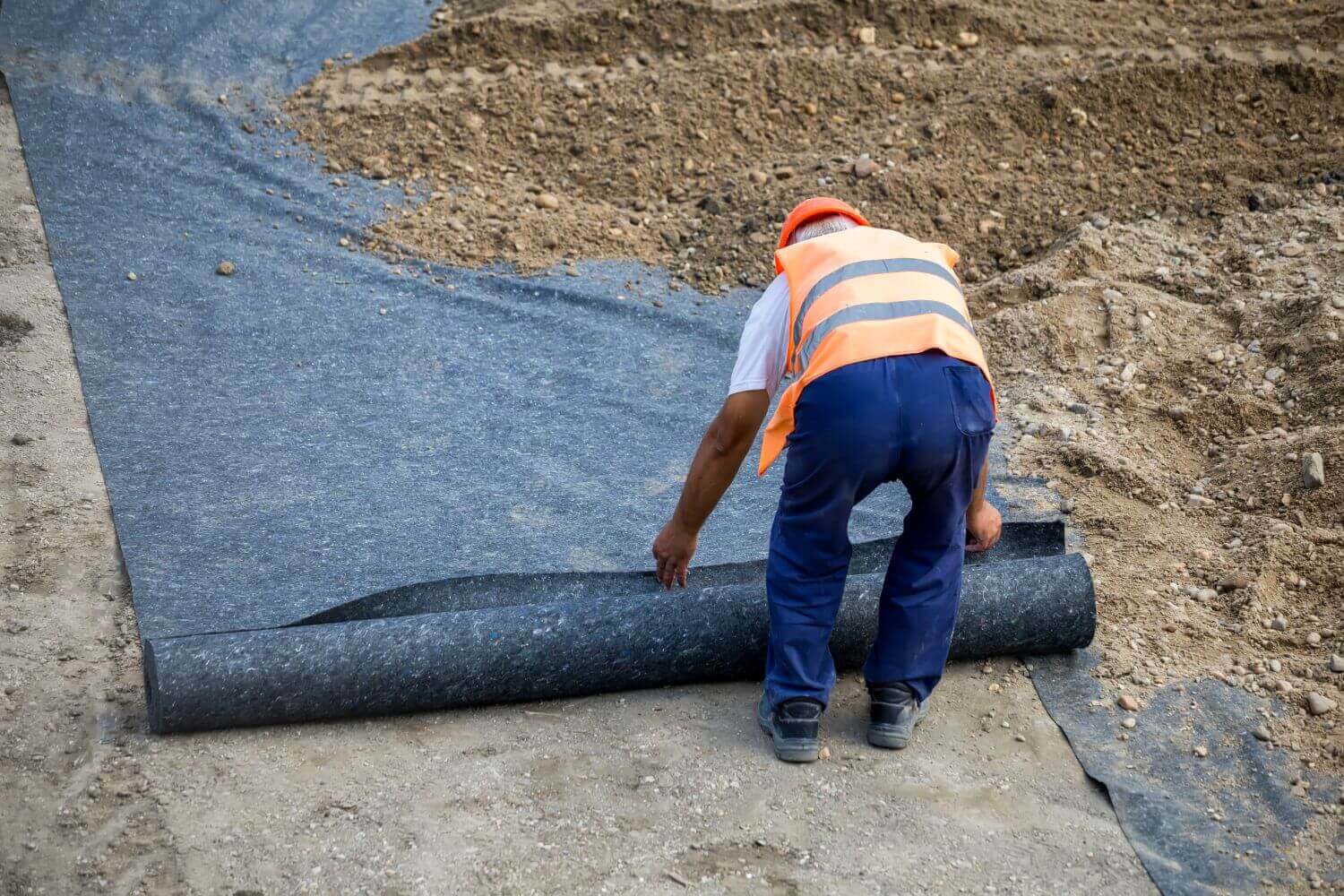
For more demanding applications, geotextiles often play a critical role in long-term slope stabilization.
Geotextiles help reinforce soils, improve drainage performance, separate soil layers, reduce soil migration, and improve overall slope integrity under challenging conditions. These systems are frequently incorporated into transportation infrastructure, utility projects, shoreline stabilization, reinforced embankments, and mechanically stabilized earth applications where structural performance is just as important as erosion control.
In high-risk areas, reinforced stabilization systems may be necessary to provide both erosion resistance and long-term slope reinforcement.
Vegetated Systems Provide Long-Term Performance
While temporary stabilization measures are essential during active construction, long-term slope stabilization often depends on establishing durable vegetation systems capable of reinforcing soils over time.
Vegetation helps anchor soils, reduce surface erosion, improve infiltration, and increase slope resiliency. However, steep slopes frequently require additional structural support to allow vegetation systems to establish successfully under real-world conditions.
Integrated vegetated systems combine engineered reinforcement with vegetative stabilization to help support long-term slope integrity on steep embankments, shorelines, reinforced soil structures, and other demanding applications.
These systems help reduce hydraulic stress while creating reinforced vegetated surfaces capable of adapting to changing environmental conditions over time. In many cases, they also provide aesthetic and environmental benefits compared to hard-armoring approaches alone.
Real-World Conditions Require Adaptable Solutions
Slope stabilization plans are often developed long before crews encounter actual field conditions. But active construction sites evolve constantly.
Storm intensity changes. Drainage patterns shift. Slopes become saturated. Runoff paths develop unexpectedly. Construction traffic impacts soils. Hydraulic conditions intensify.
The most effective slope stabilization strategies are the ones flexible enough to adapt throughout the life of the project.
That adaptability becomes especially important during peak storm seasons when steep slopes are exposed to prolonged hydraulic stress and rapidly changing environmental conditions.
Building More Resilient Slopes
Successful slope stabilization is not about relying on a single product to solve every erosion challenge. It’s about combining systems that work together to reduce runoff velocity, reinforce soils, improve drainage performance, support vegetation establishment, and maintain long-term slope integrity under real-world conditions.
At MKB, we provide integrated slope stabilization solutions designed to support contractors, engineers, municipalities, utilities, and DOT projects facing demanding erosion control challenges. From RECPs and turf reinforcement mats to slope interruption systems, geotextiles, and reinforced vegetated stabilization solutions, our team helps identify practical systems tailored to site-specific conditions.
If your project involves steep slopes, concentrated flow, or long-term stabilization challenges, contact MKB to discuss slope stabilization strategies designed for real-world performance.