

Sediment control and erosion control are often used interchangeably on jobsites, but specifications do not treat them the same. Understanding the difference isn’t just academic; it determines what gets installed, when it’s required, and how compliance is evaluated. Miss the distinction, and projects risk failed inspections, rework, or downstream impacts.
This guide breaks down what specs actually require, how agencies evaluate performance, and how to align BMP selection with real-world construction sequencing.
THE CORE DIFFERENCE (PER THE SPECS)
Erosion control prevents soil from moving in the first place.
Sediment control captures soil after it has been dislodged.
Most construction specs require both, but at different times and in different locations.
Register for a Virtual Lunch & Learn Session
Deepen your understanding of inlet protection and explore the latest trends and innovations in the field. During this session industry experts will share valuable insights, practical tips, and real-world case studies.
Earn 1 PDH Credit.
What Erosion Control Specs Require
Erosion control is source control, meaning it addresses soil movement before sediment ever enters runoff. Specifications focus on stabilizing exposed soils early and consistently to prevent detachment caused by rainfall impact, surface runoff, wind, or concentrated flow. Unlike sediment control, which reacts to soil already in motion, erosion control is intended to reduce the volume of sediment generated on the site in the first place.
Most DOT, municipal, and construction general permit specs require erosion control to be implemented proactively and maintained continuously as site conditions change. These requirements are tied closely to construction sequencing, grading progress, and periods of inactivity. In practice, erosion control expectations increase as a site moves from mass grading toward rough and final grade, with greater emphasis on stabilization and vegetation establishment over time.
Typical Erosion Control Requirements
Specs commonly require:
- Temporary stabilization and slope interruption measures used to limit flow length and break up runoff on disturbed areas during active grading and interim conditions
- Longer term or permanent stabilization once final grade is achieved, including vegetative cover or structural protection
- Protection of vulnerable areas such as slopes and channels where erosion risk is elevated
- Defined stabilization timelines tied to inactivity, seasonal conditions, or rainfall events
Failure to meet stabilization timelines is one of the most common erosion-related compliance issues cited during inspections.
Common Erosion Control BMPs
To meet these requirements, specs typically reference:
- Erosion control blankets and mats for slope and surface protection
- Straw, tackifiers, and soil binders to reduce surface erosion on flat or lightly sloped areas
- Temporary or permanent seeding to establish vegetative cover
- Turf Reinforcement Mats (TRMs) in channels or higher-stress environments requiring long-term stability
What inspectors look for:
During inspections, compliance is evaluated based on performance, not just presence:
- Are exposed soils stabilized within required timeframes?
- Is the selected erosion control measure appropriate for slope, flow, and duration?
- Is vegetation establishing, or at least adequately protected during dormant seasons?
Specs assume erosion control measures will be maintained, repaired, and adjusted as site conditions evolve. When erosion control fails, it often triggers downstream sediment control failures, making early and effective stabilization critical to overall stormwater compliance.
What Sediment Control Specs Require
Sediment control is downstream protection. While erosion control reduces soil detachment at the source, sediment control is designed to intercept, contain, and manage sediment that has already been mobilized by runoff. Specifications treat sediment control as a required safeguard to protect adjacent properties, stormwater systems, and receiving waters throughout all phases of construction.
Most DOT, municipal MS4, and construction specifications require sediment control measures to be installed before land disturbance begins and maintained until the site is permanently stabilized. These controls are considered non-negotiable baseline protections, regardless of how effective erosion control measures may be elsewhere on the site.
Typical Sediment Control Requirements
Specs commonly require:
- Perimeter controls installed prior to grading to prevent sediment from leaving the site
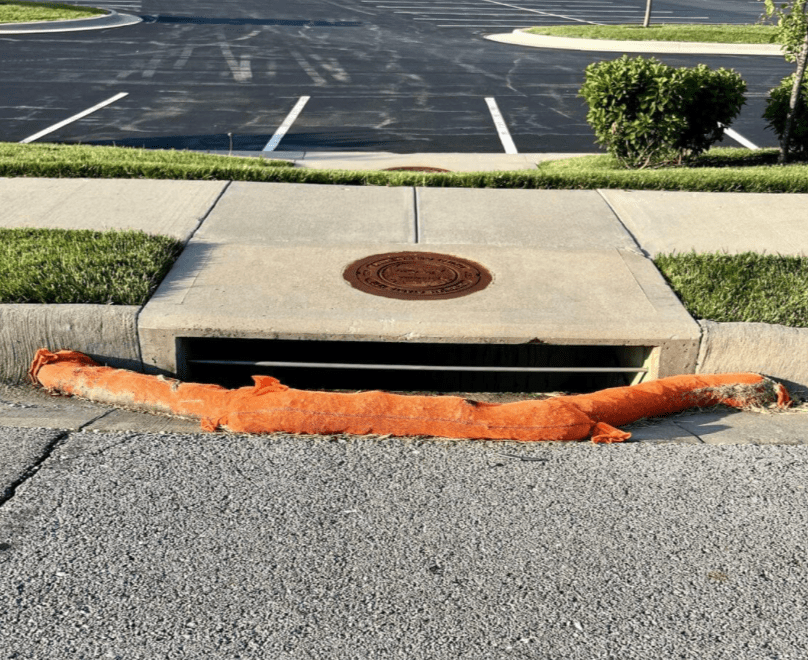
- Inlet protection for storm drains receiving runoff from disturbed areas
- Check Dams at concentrated flow paths, such as swales, ditches, and discharge points
- Routine inspection and maintenance, particularly following rainfall events
- Removal of accumulated sediment when design capacity is reduced
Unlike erosion control, sediment control requirements rarely relax during construction. These systems are expected to remain functional from mobilization through final stabilization.
Common Sediment Control BMPs
To meet these requirements, specifications typically reference:
- Silt fence and other perimeter barrier systems
- Compost filter socks or berms for flexible perimeter and flow control
- Inlet protection devices (grate, curb, or drop inlet applications)
- Sediment traps and basins for higher-volume runoff areas
Selection is expected to reflect site size, drainage area, slope, soil conditions, and anticipated runoff volumes, not just availability or habit.
What Inspectors Look For
Sediment control inspections focus heavily on installation quality and ongoing performance:
- Are sediment controls installed in the correct locations relative to flow paths?
- Are systems properly trenched, anchored, and supported?
- Is sediment buildup being removed before capacity is compromised?
- Are controls preventing off-site discharge under current site conditions?
Inspectors evaluate sediment control based on real-time function, not original installation. Controls that were compliant during mobilization may fail later if site conditions change and systems are not adjusted accordingly.
Why Sediment Control Fails (and Gets Flagged)
Most sediment control violations stem from:
- Controls installed too late or in the wrong location
- Inadequate maintenance after rain events
- Undersized systems overwhelmed by runoff
- Treating sediment control as temporary instead of continuous protection
Specs assume sediment control measures will be adapted as grading progresses, drainage patterns shift, and runoff volumes increase.
Why Specs Often Require Both (and Why One Is Not Enough)
Specifications consistently require both erosion control and sediment control because each addresses a different failure point in the stormwater chain. Relying on one without the other leaves gaps that are routinely exposed during high-intensity or long-duration storm events.
A stabilized slope without perimeter control can still release sediment during heavy rain, freeze–thaw cycles, or early vegetation failure. Even well-installed erosion control measures are not designed to capture every particle, especially during first-flush runoff when fine sediments are most mobile.
Conversely, a silt fence or perimeter control installed below an unstabilized slope will eventually be overwhelmed. Sediment loads generated at the source can exceed the design capacity of downstream controls, leading to overtopping, undercutting, or complete system failure. In these cases, sediment control becomes a reactive fix rather than effective protection.
That’s why specs require a layered BMP approach:
- Erosion control to minimize soil detachment at the source
- Sediment control to intercept and contain material that still moves
This redundancy is intentional. It allows systems to share the load, reducing stress on individual BMPs and improving overall site resilience as conditions change.
Projects that fail to implement both measures in coordination often experience:
- Washouts and slope failures
- Repeated BMP repairs and replacement
- Inspection deficiencies and stop-work orders
- Increased labor and material costs from rework
Specs are written to anticipate real-world variability, including unpredictable storms, evolving grading, and imperfect installation. Using erosion and sediment control together isn’t over-compliance; it’s how specs are designed to function in practice.
Where Confusion Usually Happens
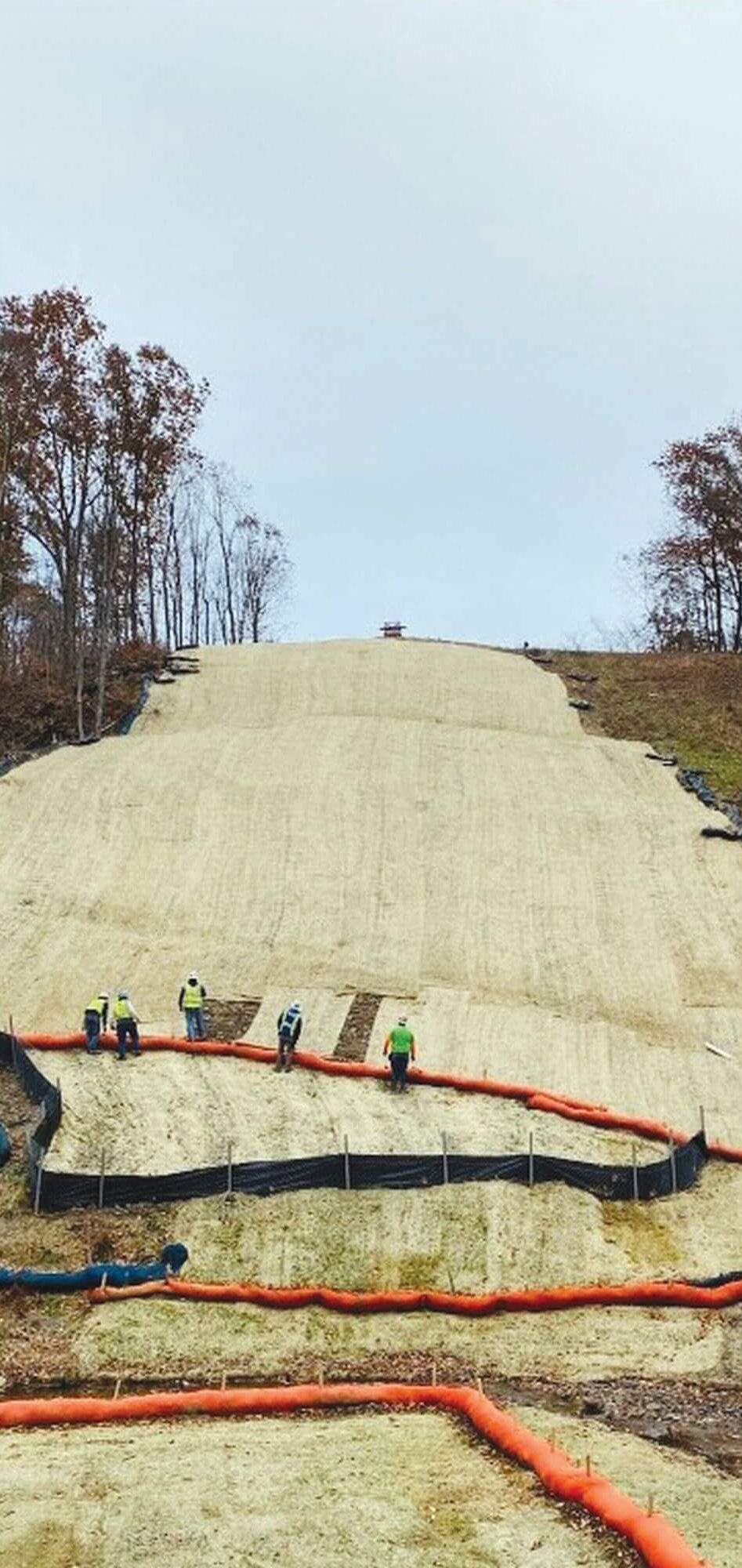
Most erosion and sediment control compliance issues don’t stem from missing BMPs, they stem from misalignment between site conditions, BMP selection, and ongoing maintenance. Specs assume that controls will evolve as the site evolves, but in practice, that coordination often breaks down.
Common problem areas include:
- Sediment control is installed early, while erosion control is delayed, allowing high sediment loads to overwhelm downstream systems
- Erosion control specified but not maintained, leading to torn blankets, failed seed establishment, or exposed soil during inactivity periods
- BMPs installed without regard to changing flow conditions, such as increased drainage areas or redirected runoff as grading progresses
- Documentation focused on BMP presence rather than performance, even when controls are no longer functioning as intended
As enforcement expectations increase, specs place greater emphasis on installation quality, maintenance, and real-time performance, not just whether a BMP appears on the plan set.
Reading Specs the Way Inspectors Do
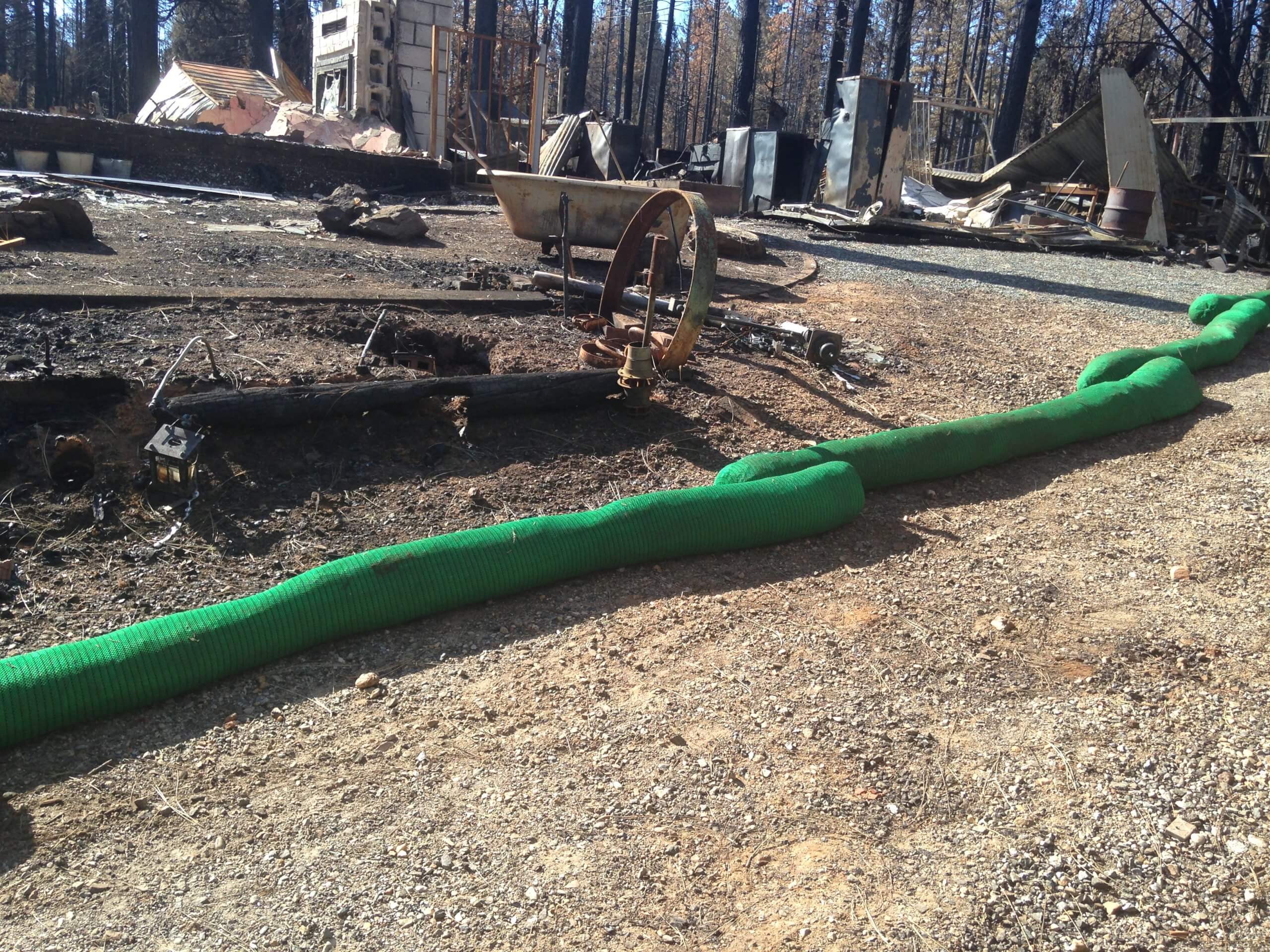
Inspectors don’t evaluate compliance by asking whether a BMP exists on site. They evaluate whether the intent of the specification is being met under current conditions.
Typical inspection questions include:
- Is this BMP appropriate for the site’s current phase of construction?
- Was it installed per manufacturer guidance and project specifications?
- Is it functioning today, based on recent weather, flow paths, and sediment loading, not based on when it was installed?
Specs are written with the assumption that BMPs will be adjusted, repaired, or replaced as site conditions change. Teams that understand how erosion control and sediment control work together are better positioned to anticipate inspection outcomes, address issues proactively, and avoid reactive fixes after a deficiency is noted.
The Takeaway: Specs Don’t Choose Sides—They Require Strategy
Sediment control and erosion control are not competing approaches. Specs often require both, applied correctly, sequenced properly, and maintained consistently.
Projects that succeed:
- Match BMPs to site phase and flow conditions
- Treat erosion control as prevention, not cleanup
- Use sediment control as a safety net, not a primary solution
That’s what specs really require, and what keeps projects compliant, efficient, and moving forward.
Looking to align your BMP plan with spec intent—not just minimum requirements?
Understanding where erosion control stops and sediment control begins is the first step toward building stormwater plans that work in the field. Contact MKB today to get started.