

Sediment doesn’t become a problem when it reaches the storm drain. It becomes a problem the moment it starts moving.
By the time runoff hits an inlet, you’re already in a reactive position by trying to contain something that should have been controlled upstream.
In 2026, that approach isn’t holding up. Inspectors are looking for performance, not just presence. And the sites that stay compliant aren’t the ones relying on last-minute fixes at the drain. They’re the ones that stop sediment before it gets there.
Register for a Virtual Lunch & Learn Session
Deepen your understanding of green infrastructure and explore the latest trends and innovations in the field. During this session industry experts will share valuable insights, practical tips, and real-world case studies.
Earn 1 PDH Credit.
Why Storm Drain Protection Alone Isn’t Enough
Storm drain inlet protection is critical, but it’s also the last line of defense.
Relying on it alone creates risk:
- High sediment loads clog inlet protection quickly
- Water overtops or bypasses under pressure
- Localized flooding can occur around the inlet
- Maintenance becomes constant and costly
When upstream controls are weak, inlet protection is forced to do too much. And eventually, it fails.
The Smarter Approach: Control Sediment Upstream
The most effective strategy is simple in concept: Slow the water. Spread the flow. Capture sediment before it concentrates.
This requires a layered approach to runoff control, not a single product placed at the lowest point on the site.
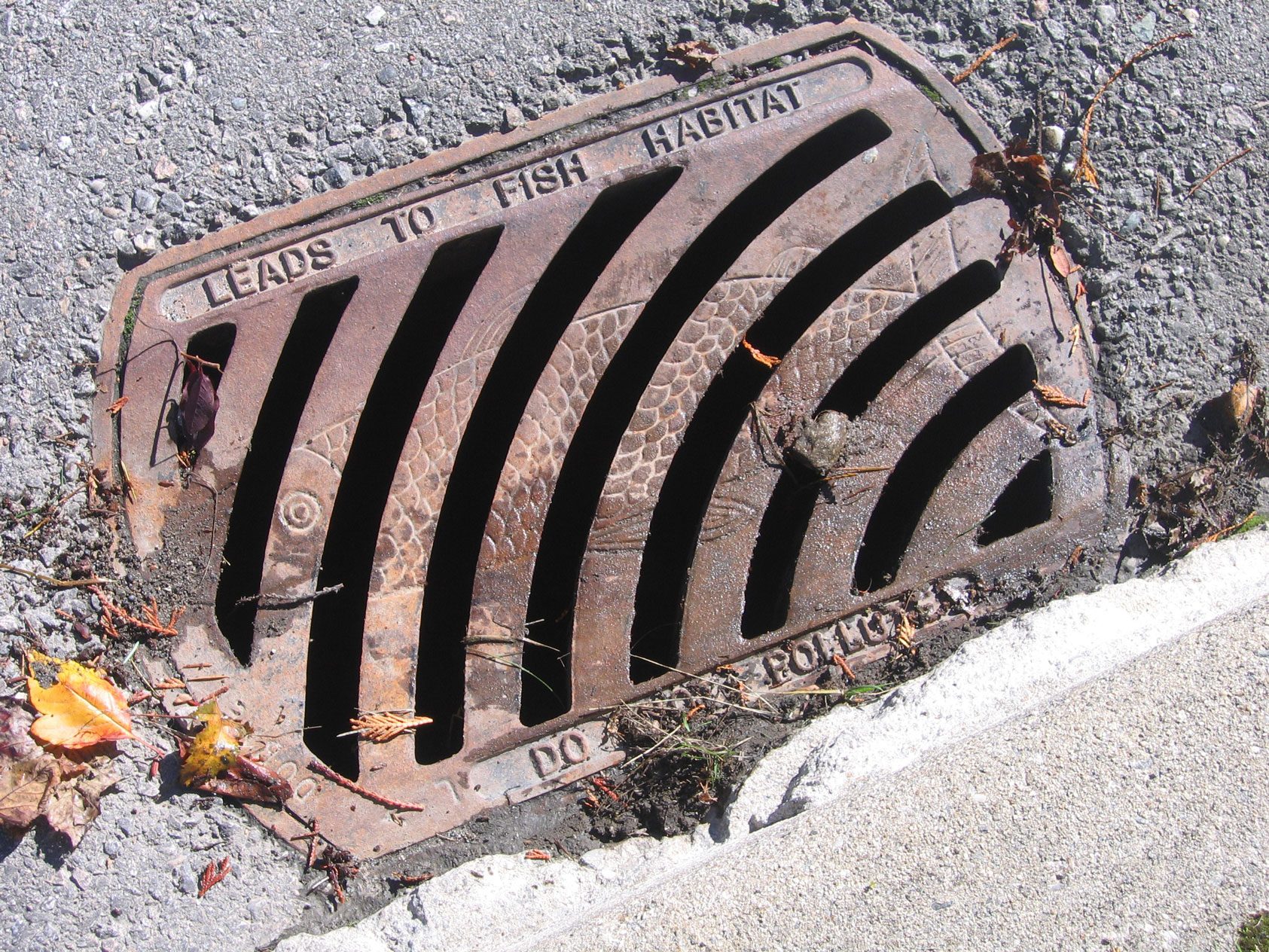
Step 1: Break Up Flow Paths Before They Build Speed
Sediment moves when water gains velocity. The longer water flows uninterrupted, the more energy it builds and the more soil it carries.
What to do:
- Interrupt slope lengths
- Add check structures in ditches and channels
- Reduce concentrated flow paths early
What works:
- Compost filter socks like Siltsoxx used as check dams
- Perimeter controls placed strategically—not just at boundaries
These solutions don’t just block sediment, they reduce the energy driving it.
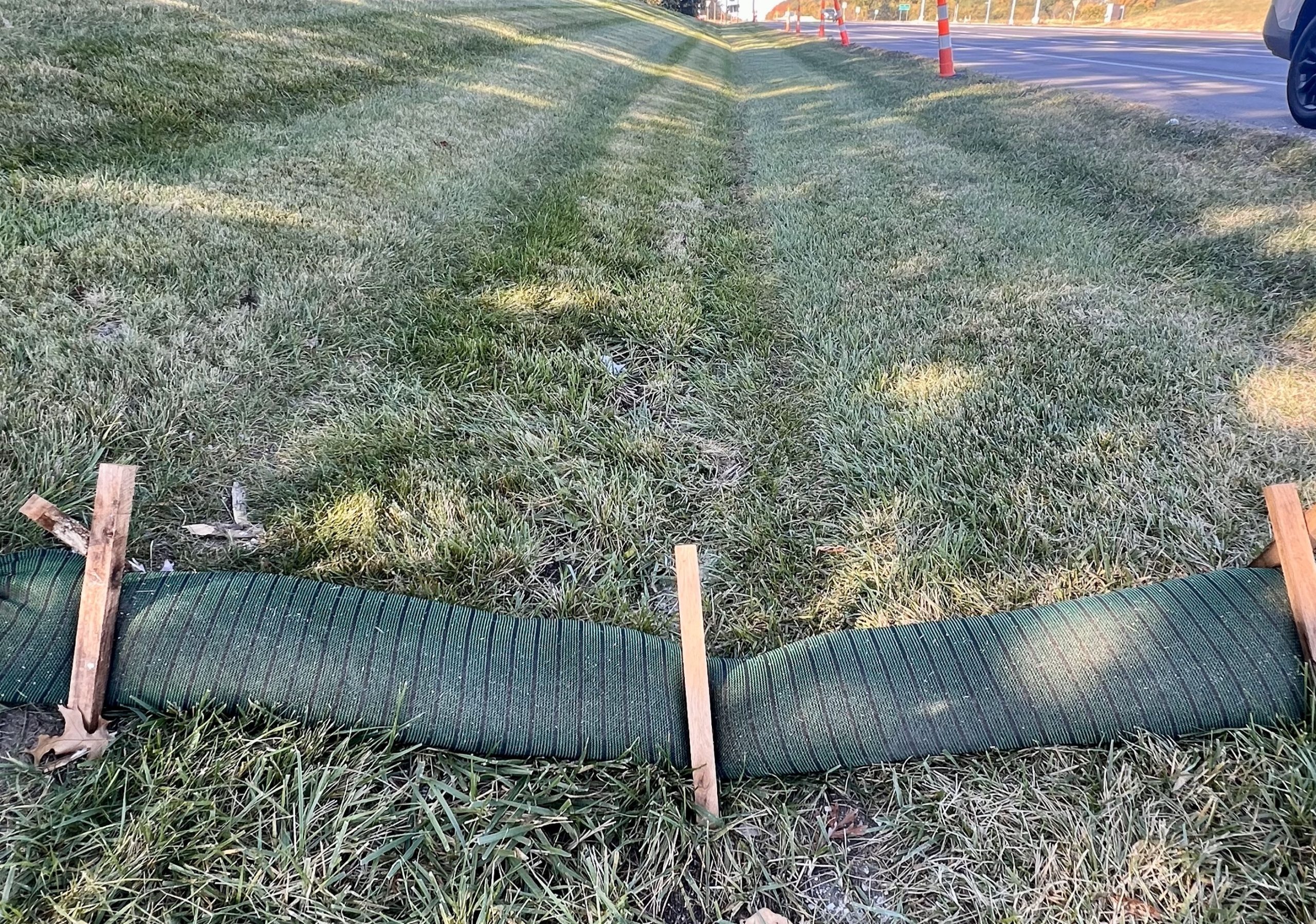
Step 2: Seal the Perimeter to Prevent Bypass
One of the most common causes of sediment loss is simple: Water goes under, around, or through poorly sealed BMPs. Rigid systems struggle to adapt to uneven terrain, leaving gaps that become failure points during the first storm.
What to do:
- Use perimeter controls that conform to the ground
- Eliminate gaps and weak points
- Reinforce high-flow sections
What works:
- Compost filter socks that fully contact the soil surface
- Reinforced silt fence systems like Siltron where specs require
The goal is containment, not just placement.
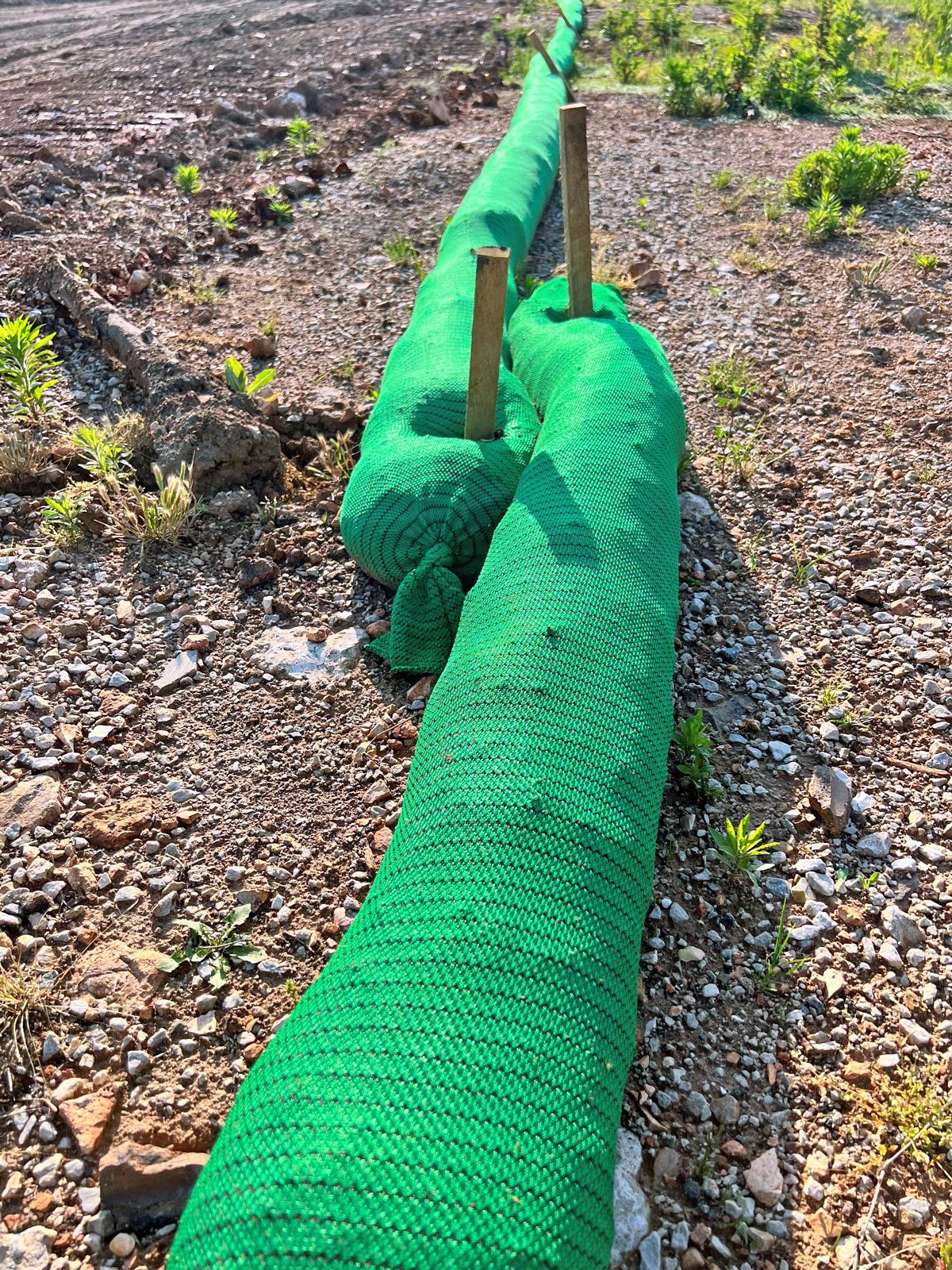
Step 3: Reduce Sediment Load Before It Reaches the Inlet
Even with good perimeter control, some sediment will move. The key is reducing how much makes it downstream.
What to do:
- Add secondary controls along flow paths
- Treat slopes, channels, and transition points
- Target areas where water concentrates
What works:
- Filter socks placed along contours
- Check dams in ditches and swales
- Layered sediment barriers in high-risk zones
By the time runoff reaches the inlet, it should already be carrying significantly less sediment.
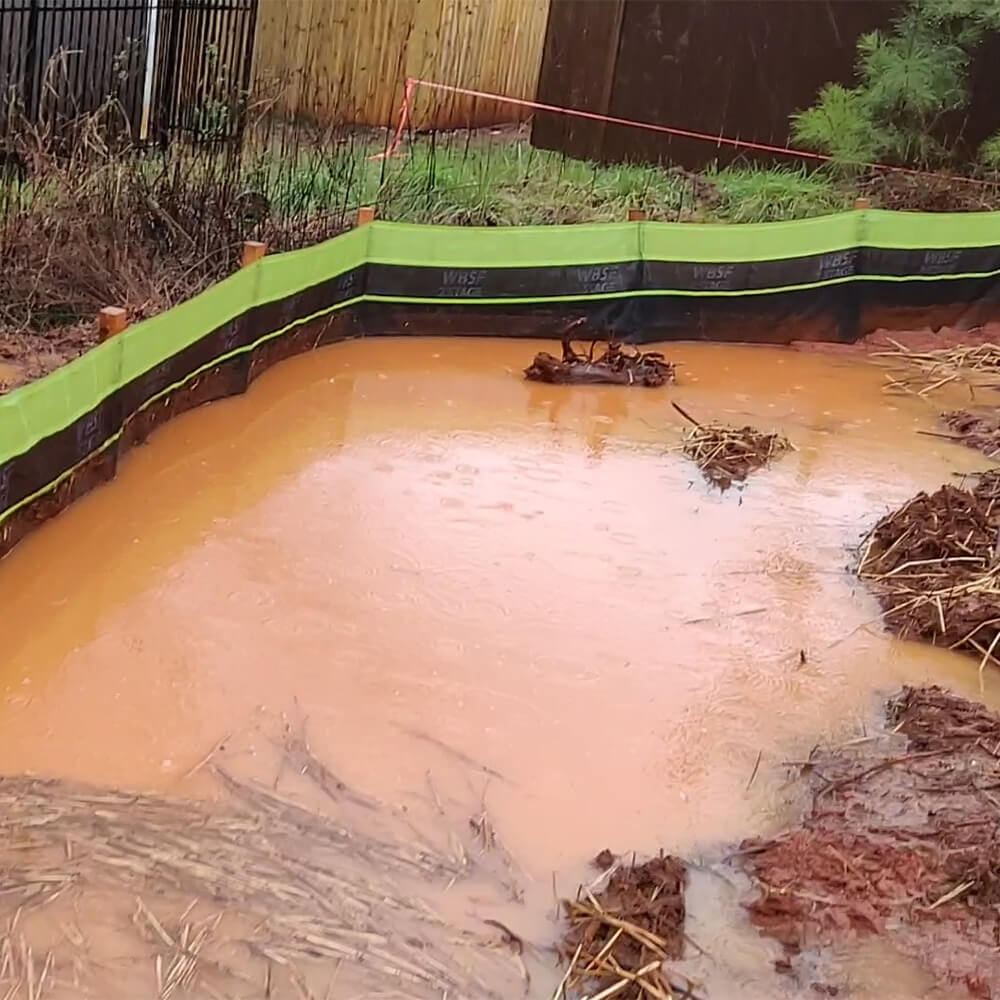
Step 4: Use Inlet Protection the Right Way
Once water reaches the storm drain, inlet protection still plays a critical role, but only if it’s used correctly.
What to avoid:
- Overloading inlet protection with high sediment volumes
- Using products that block flow instead of filtering it
- Poor fit that allows bypass
What to prioritize:
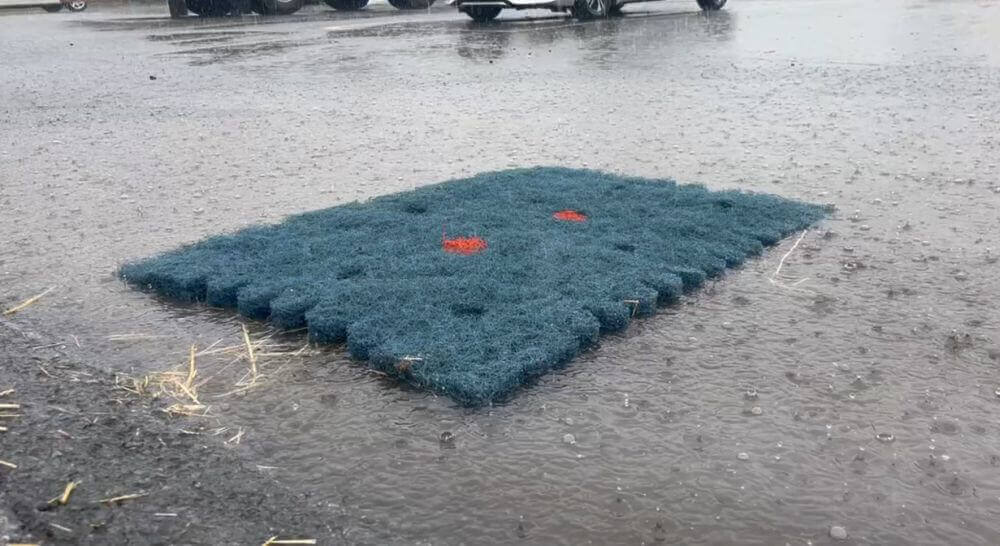
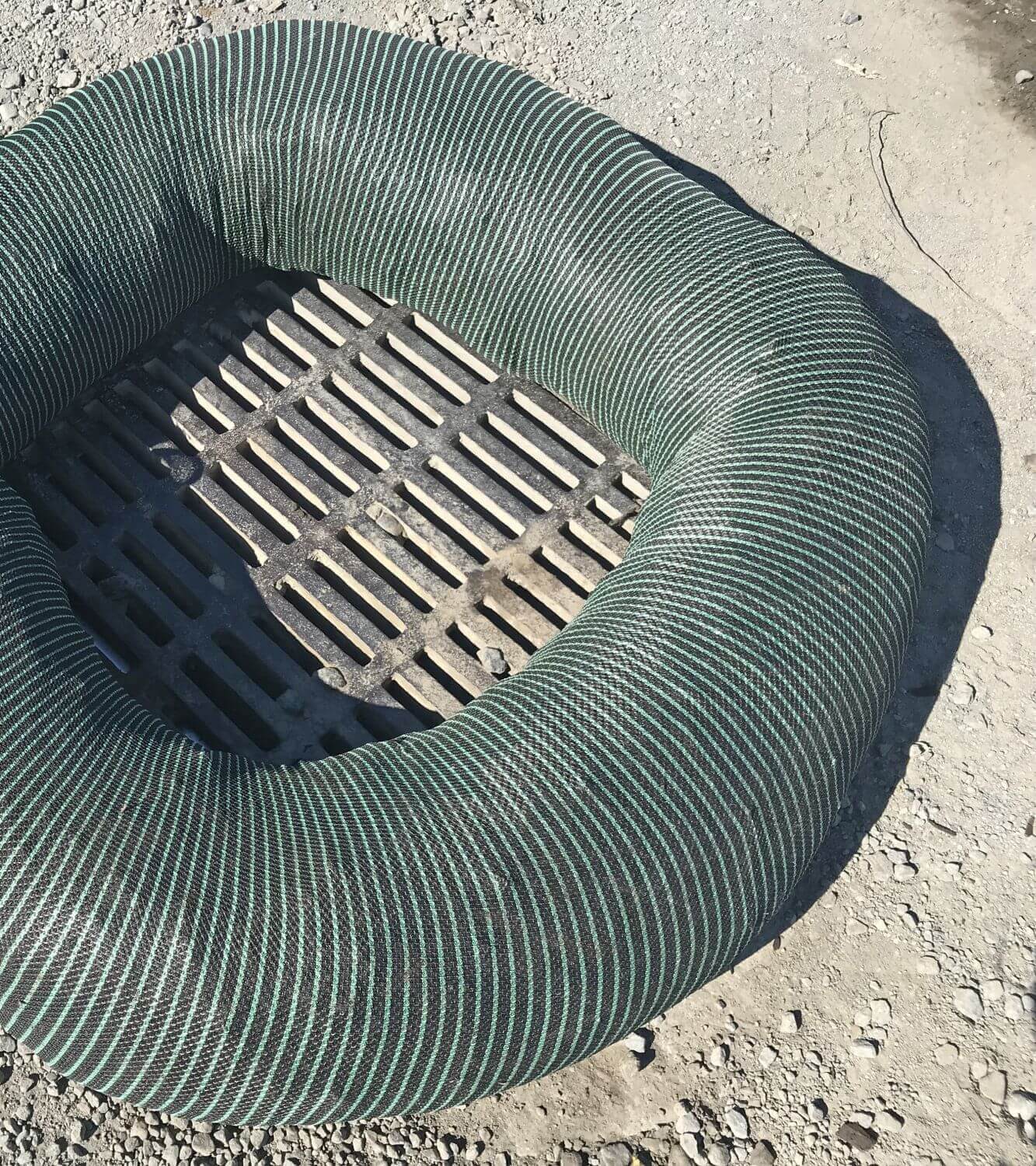
- Solutions like Blackhawk Inlet Filter Mats or FryeFlow Inlet Filter Bag that balance filtration and flow capacity
- Proper installation for full coverage
- Regular inspection during active conditions
When upstream controls are doing their job, inlet protection becomes a backup system—not a bottleneck.
Where Most Job Sites Go Wrong
Sediment control failures usually aren’t caused by a lack of products. They’re caused by misplaced strategy.
Common mistakes include:
- Installing BMPs only at the perimeter
- Ignoring flow paths until problems appear
- Over-relying on inlet protection
- Using the same approach regardless of site conditions
The result is predictable: Sediment builds, systems get overwhelmed, and maintenance becomes reactive.
What High-Performing Sites Do Differently
Sites that consistently pass inspection and reduce rework follow a different approach:
- They control runoff early, not just at discharge points
- They use multiple BMPs working together
- They match solutions to real site conditions
- They prioritize performance over minimum spec
This is where MKB’s sediment control solutions are designed to perform.
How MKB Helps Stop Sediment Before It Moves
MKB provides a full range of sediment control solutions built for real-world jobsite conditions, including:
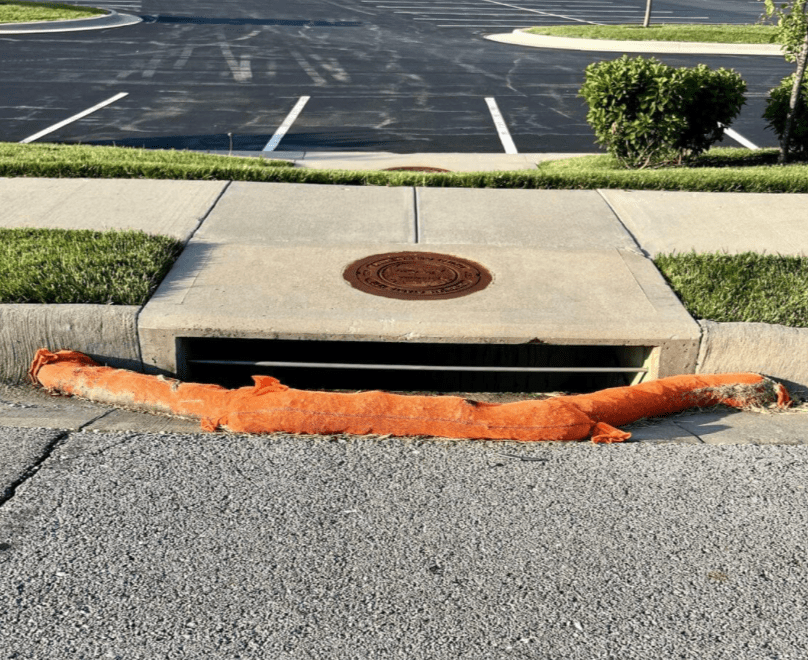
- SiltSoxx for flexible perimeter control and flow interruption
- Siltron reinforced silt fence systems for added strength where required
- Inlet protection solutions designed to capture sediment without restricting flow
These products are designed to work together, helping contractors:
- Reduce sediment loss at the source
- Minimize maintenance and rework
- Improve inspection outcomes
- Maintain control through changing conditions
Stop Sediment Before It Becomes a Problem
If sediment is reaching your storm drains, the problem didn’t start there – it started upstream.
The most effective sediment control strategies don’t rely on a single solution at the lowest point on the site. They build control into every stage of water movement, from slope to perimeter to inlet, so runoff is managed before it becomes a liability. Because once sediment reaches the drain, you’re already behind.
If you’re ready to take a more proactive approach, MKB can help you design a sediment control strategy that performs under real conditions, not just on paper.
Contact MKB today to get expert guidance on your next project.