

Two construction sites can receive the same amount of rain and experience completely different results. One may absorb much of the rainfall before significant runoff develops. Another may shed water quickly across the surface. On one site, soil particles may wash away with surprisingly little water. On another, concentrated runoff may carve channels through exposed ground.
One of the biggest reasons is right under your feet: the soil itself.
Soil type influences how quickly water infiltrates, how much runoff develops, how easily particles detach, how readily sediment is transported, and how successfully vegetation becomes established.
That means effective sediment and erosion control shouldn’t begin with the question, “What did we use on the last project?”
It should begin with understanding the conditions on this one.
Register for a Virtual Lunch & Learn Session
Deepen your understanding of green infrastructure and explore the latest trends and innovations in the field. During this session industry experts will share valuable insights, practical tips, and real-world case studies.
Earn 1 PDH Credit.
Why Soil Type Matters for Erosion Control
Erosion begins when soil particles are detached by forces such as rainfall or flowing water and transported away from their original location. How easily that happens depends partly on the characteristics of the soil.
Particle size, structure, permeability, organic content, compaction, slope, vegetation, and moisture conditions can all influence how soil responds to rainfall and runoff.
That’s why there isn’t a single erosion control solution that’s appropriate for every construction site. A solution that performs well on one soil may face very different conditions on another, even when rainfall, slope, and construction activity appear similar.
The same rainfall event can create very different erosion problems on two different soils.
Understanding those differences can help contractors and designers select sediment and erosion control solutions based on actual site conditions rather than relying on a one-size-fits-all approach.
Sandy Soils: Water Moves Through Quickly, but Soil Can Move Too
Sandy soils contain relatively large particles and generally allow water to infiltrate more readily than finer-grained soils.
At first glance, that might sound ideal for erosion control. Greater infiltration can mean less surface runoff under some conditions.
But sandy soils present their own challenges.
Because the individual particles have relatively little cohesion, exposed sand can be vulnerable to detachment and movement. Once runoff does develop, particularly on slopes or where water becomes concentrated, soil can begin moving quickly.
Vegetation establishment can also be more challenging. Sandy soils tend to drain rapidly and may have difficulty retaining the moisture and nutrients plants need to establish strong root systems. That can make stabilization particularly important on disturbed sandy slopes.
Erosion control strategies may need to focus on protecting the soil surface while vegetation establishes and prevents runoff from becoming concentrated enough to begin cutting into the slope.
Depending on site conditions, rolled erosion control products (RECPs) can help protect exposed soil from rainfall and surface flow while supporting vegetation establishment. Where greater reinforcement is required, turf reinforcement mats (TRMs) may provide additional long-term support for vegetated areas exposed to higher hydraulic stresses.

Silty Soils: Small Particles, Significant Erosion Potential
Silty soils can present some of the most challenging erosion conditions on a construction site. Silt particles are smaller than sand but larger than clay. They can be readily detached and transported by runoff, particularly when the soil surface is exposed.
Once mobilized, those fine particles can travel significant distances with stormwater, which creates challenges on both sides of the erosion and sediment equation.
The first priority is reducing erosion at the source by protecting exposed soil and managing runoff. But because silty material can be easily transported once detached, effective sediment control is also critical during active construction.
This is where the distinction between the two becomes important.
Erosion control works to keep the soil in place. Sediment control manages the material after it begins moving.
On sites with highly erodible silty soils, relying heavily on downstream sediment controls without addressing the exposed soil upstream can create an ongoing maintenance problem.
The more soil that can be stabilized at the source, the less sediment the rest of the system has to manage.
Clay Soils: Less Infiltration Can Mean More Runoff
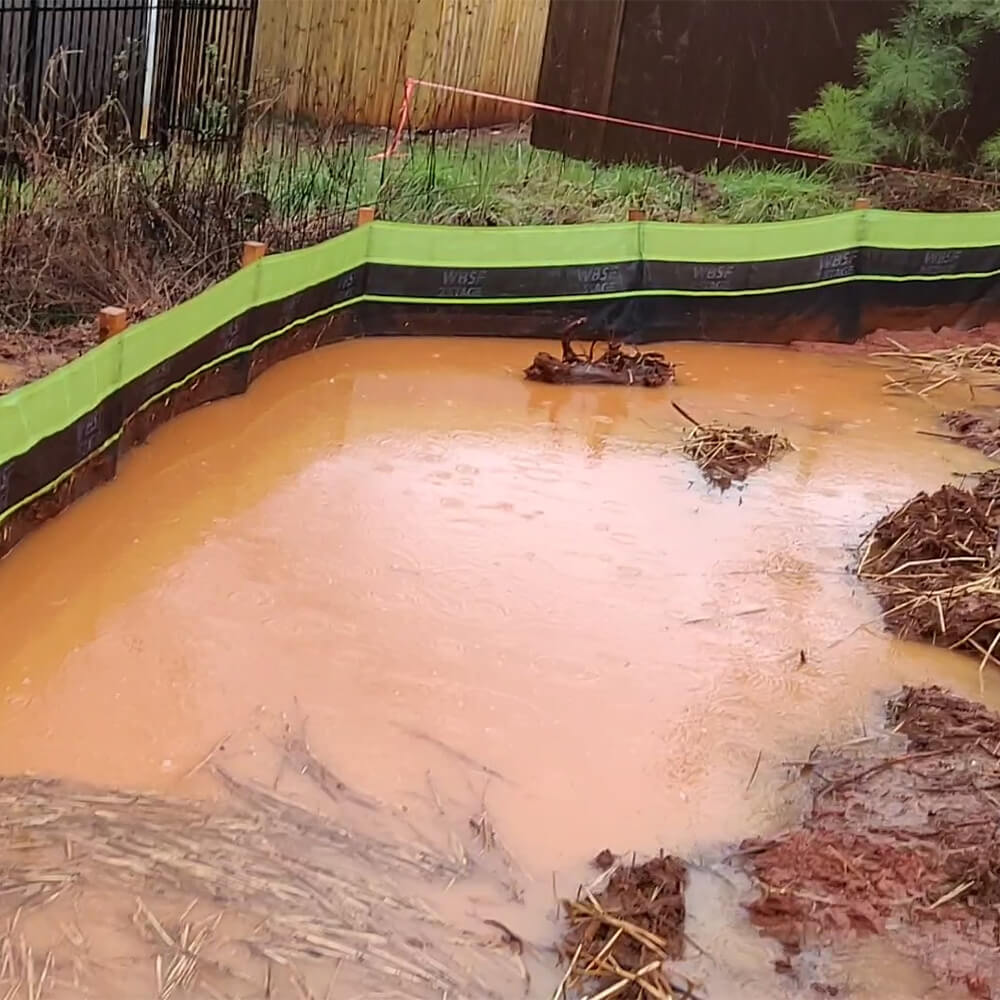
Clay soils behave differently. Their extremely fine particles and small pore spaces generally result in slower infiltration than sandy soils. When rainfall intensity exceeds the soil’s ability to absorb water, more water may remain on the surface and become runoff.
On a disturbed construction site, that can become particularly important.
Heavy equipment can further compact the soil, reducing infiltration and encouraging water to travel across the surface rather than into the ground. The result can be significant runoff even when the soil itself appears dense and stable.
As that water moves downslope or becomes concentrated, its erosive potential increases.
Clay particles can also create sediment control challenges once they become suspended in water. Fine particles may remain suspended longer than larger particles, making them difficult to manage using systems that rely primarily on settling.
For erosion control, the strategy should consider not only the soil’s resistance to detachment but also the amount and concentration of runoff the surface may generate.
Protecting exposed areas, managing flow paths, stabilizing slopes, and preventing runoff from concentrating can all become important parts of the strategy.
The Construction Site May Not Behave Like the Original Soil
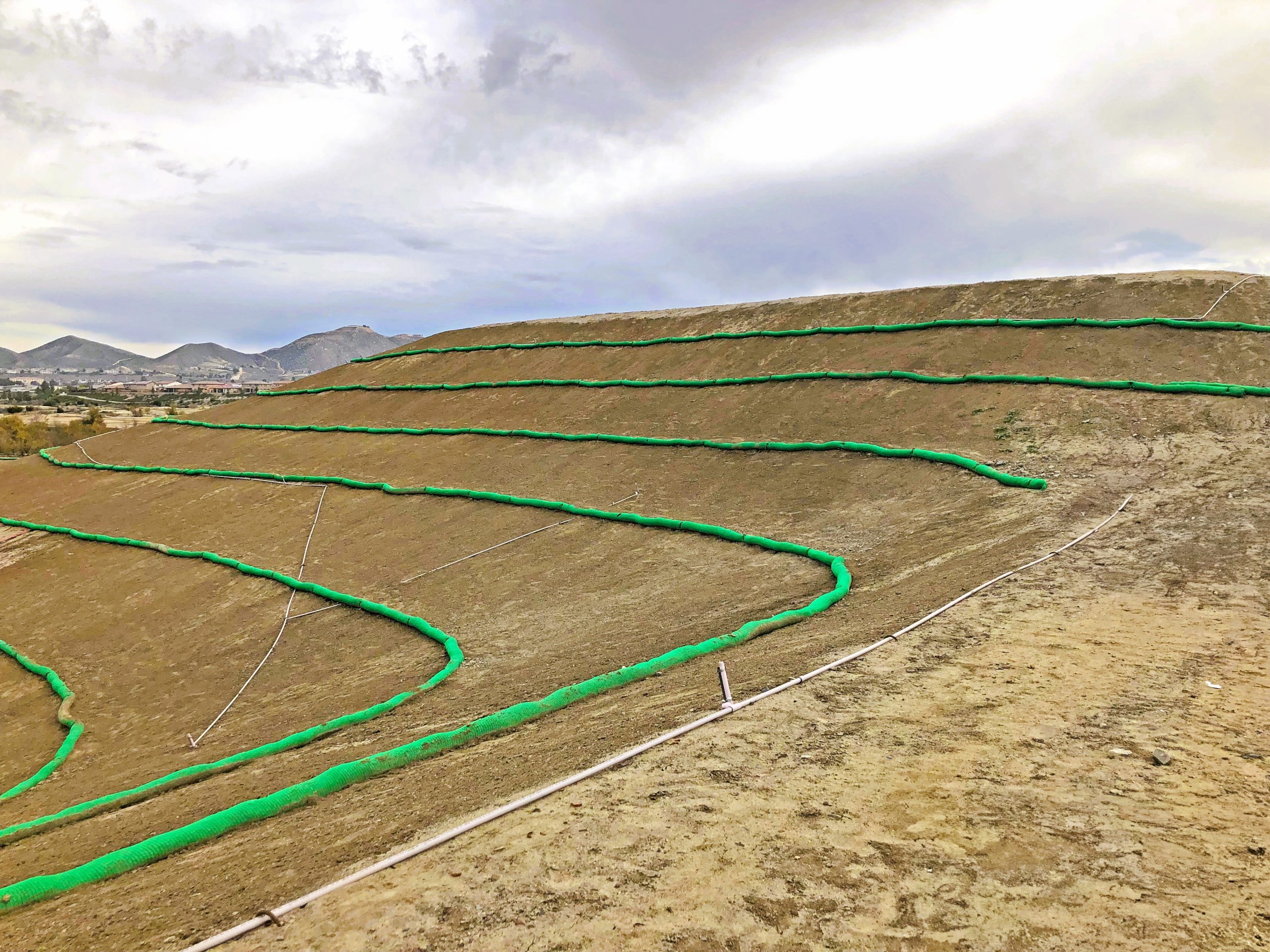
Soil maps, geotechnical reports, and site evaluations provide important information, but construction itself changes soil conditions.
Clearing removes vegetation and root systems that previously protected the ground.
Grading can expose different soil horizons.
Excavation can bring subsoil to the surface.
Heavy equipment can compact areas that once absorbed rainfall more readily.
Imported fill may introduce entirely different soil characteristics.
Stockpiles can behave differently than the undisturbed ground around them.
By the time construction is underway, the surface responding to rainfall may bear little resemblance to the pre-construction site, which is one reason erosion control needs to evolve with the project.
A plan developed around initial site conditions should still be evaluated against what’s actually happening in the field.
Compaction Changes the Equation
Compaction deserves particular attention because it can dramatically change how water moves across a construction site.
A soil that normally allows reasonable infiltration may behave very differently after repeated passes from heavy equipment.
As pore spaces are compressed, less rainfall may infiltrate into the ground. More water can remain at the surface and become runoff, which means even a soil type that isn’t typically associated with high runoff can develop drainage and erosion problems after construction activity changes its structure.
Compaction can also make vegetation establishment more difficult.
Roots need suitable soil conditions to develop. If permanent stabilization depends on vegetation but the underlying soil is heavily compacted, simply applying seed may not produce the long-term erosion control expected from the design.
Before relying on vegetation for permanent stabilization, contractors should consider whether the soil conditions can actually support successful establishment.
Slope Makes Soil Type Even More Important
Soil doesn’t operate in isolation. Slope changes the way water interacts with it.
As slope length and steepness increase, runoff can gain velocity and erosive energy. A soil that remains relatively stable on flat ground may become much more vulnerable when exposed on a steep slope.
This is where soil type and site geometry need to be considered together.
A sandy slope may be vulnerable because particles detach easily.
A silty slope may generate material that is readily transported downstream.
A compacted clay slope may generate substantial surface runoff.
Different mechanisms can produce the same visible result: soil moving downhill.
The appropriate slope stabilization strategy therefore depends on more than the steepness of the slope alone.
Designers should consider soil characteristics, expected runoff, vegetation, slope length, gradient, flow concentration, and the level of reinforcement required for long-term performance.

Vegetation Isn't Equally Easy to Establish Everywhere
Vegetation is one of the most effective tools for long-term erosion control, but successful establishment depends heavily on soil conditions.
Roots reinforce soil, vegetation intercepts rainfall, and surface cover helps reduce direct raindrop impact, but getting from seed to established vegetation can be very different from one site to another.
Sandy soils may struggle to retain moisture.
Compacted soils may restrict root growth.
Poor or disturbed subsoils may lack the characteristics necessary to support healthy vegetation.
Steep slopes can make seed and soil amendments more vulnerable to displacement before germination occurs.
That’s why permanent stabilization should consider both how vegetation will be established and how the soil will be protected while that happens.
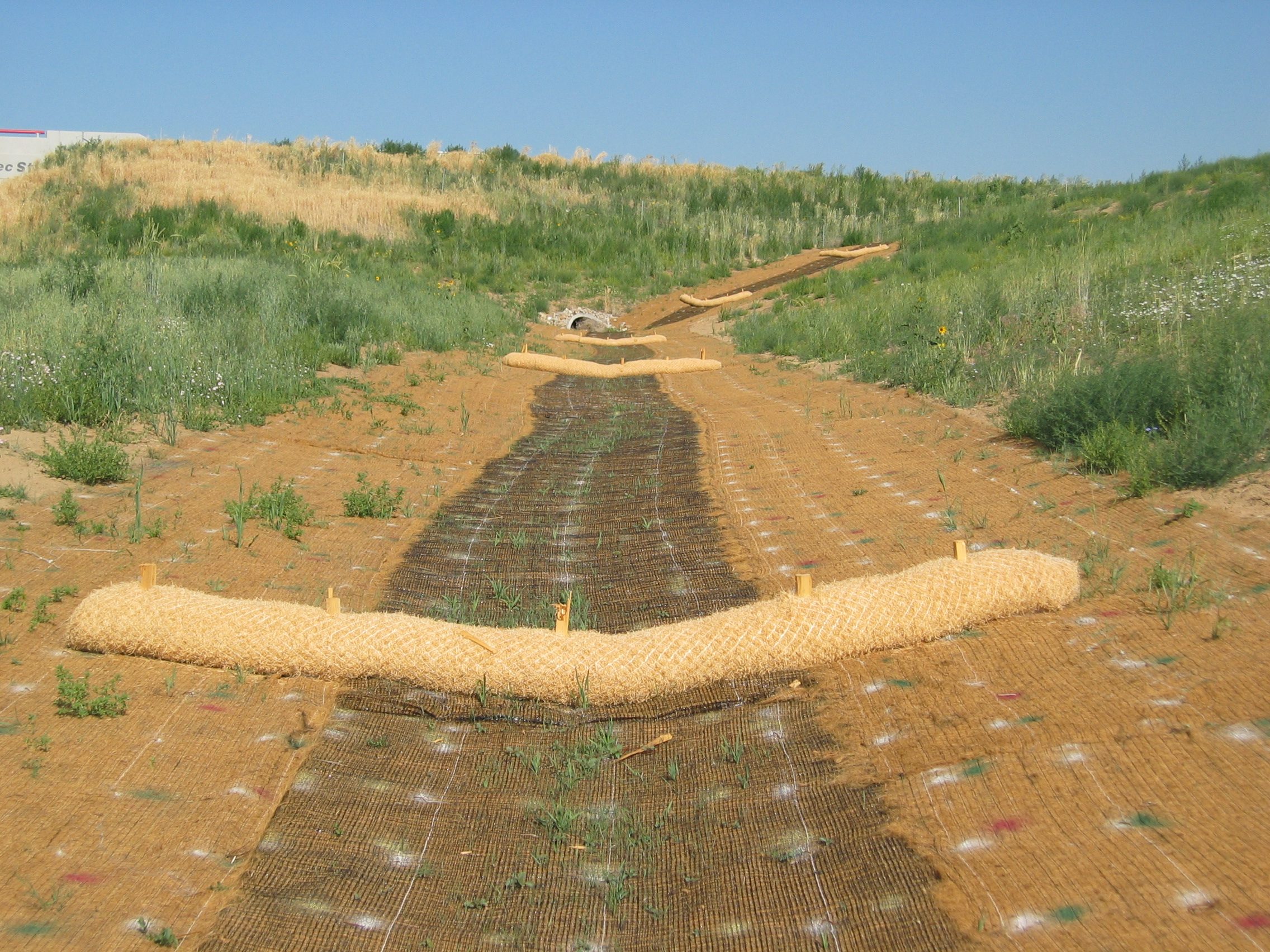
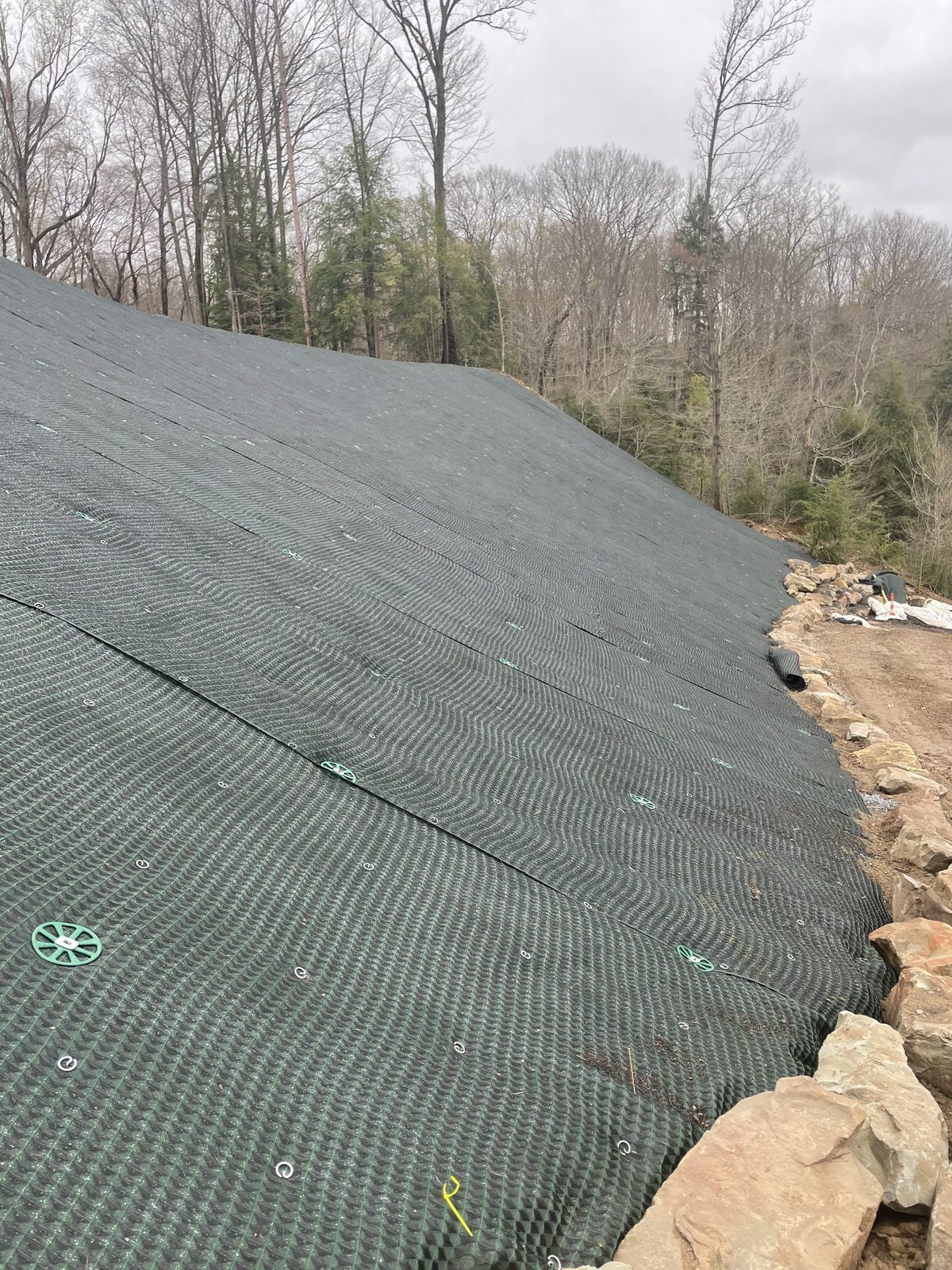
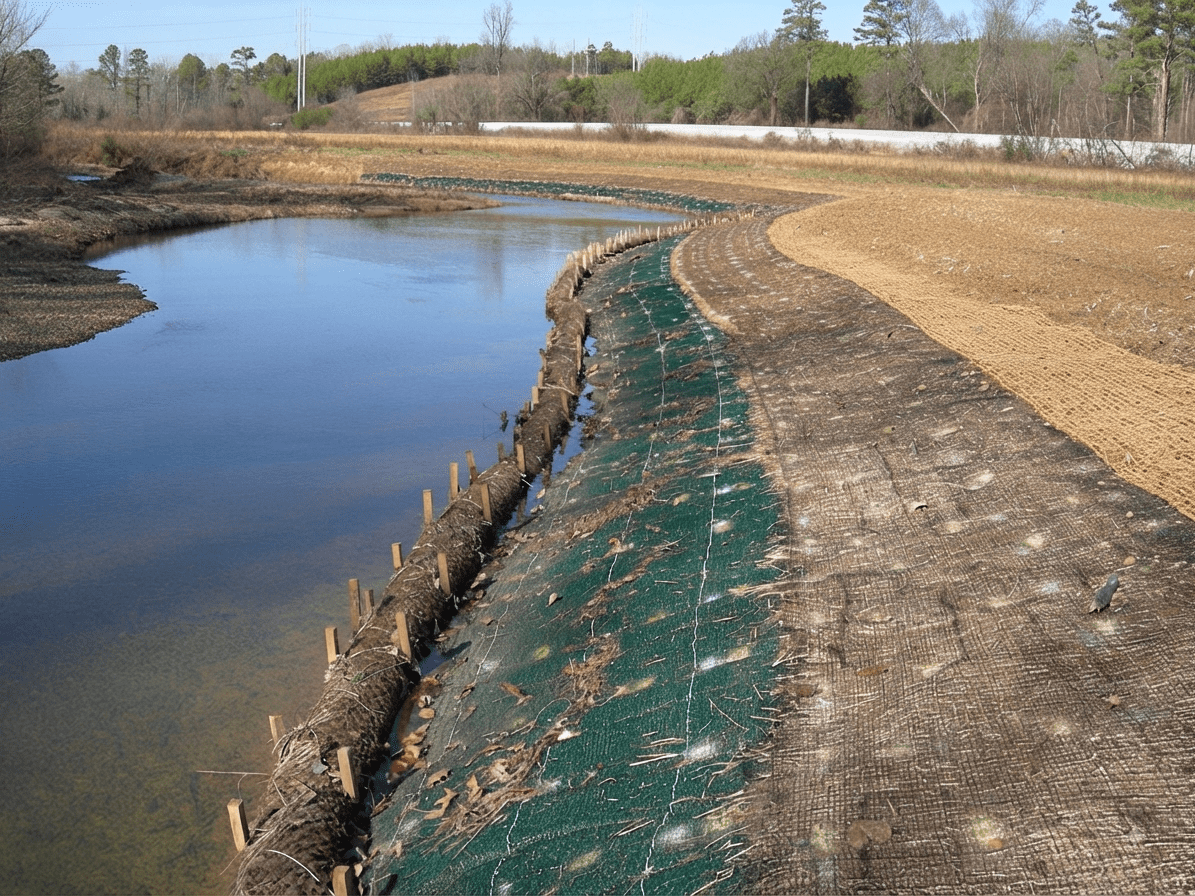
RECPs can provide temporary or long-term surface protection while supporting vegetation establishment, depending on the application and product selected.
TRMs can provide additional reinforcement where established vegetation will be subjected to greater hydraulic forces.
Other sites may require geotextiles or engineered vegetated systems as part of a broader slope stabilization strategy.
The solution should follow the conditions, not the other way around.
Don't Forget About the Sediment the Soil Produces
Soil type also matters after erosion occurs. Different particle sizes behave differently once they’re carried by runoff. Larger particles generally settle more readily as water slows. Fine particles can remain suspended and travel farther.
That matters when selecting and maintaining sediment control BMPs.
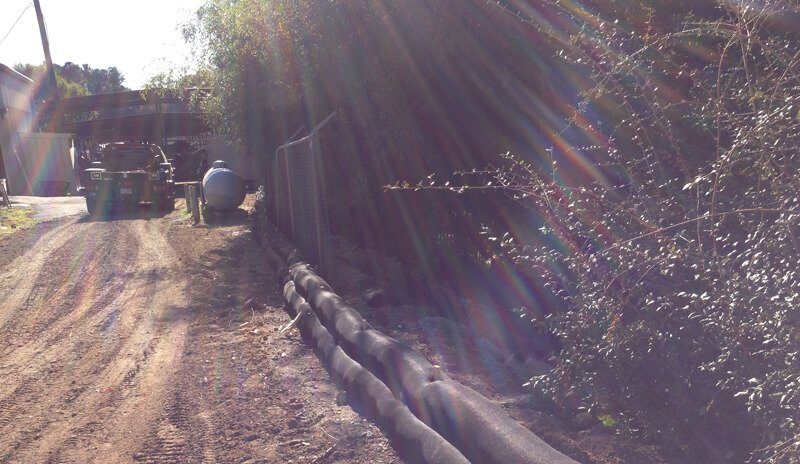
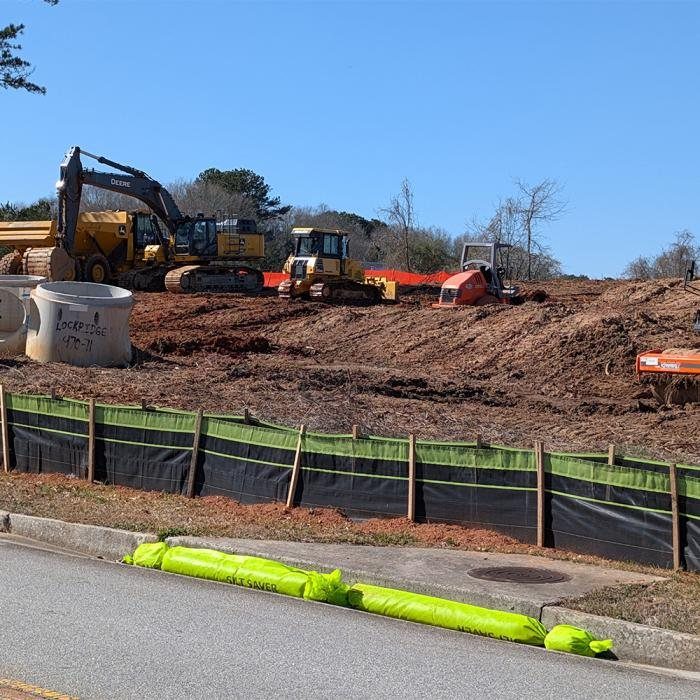
SiltSoxx, wattles, silt fence, inlet protection, and other sediment control solutions all operate downstream of the erosion process. Their job is to manage sediment that has already become mobilized. The characteristics and quantity of that sediment can affect how those systems perform and how frequently they require maintenance. A site producing large amounts of sediment shouldn’t automatically be viewed as a sediment control problem – instead, it may be telling you something about erosion upstream.
Read the Site, Not Just the Specification
Specifications and erosion and sediment control plans provide the framework for protecting a construction site…but the site itself provides feedback.
After rainfall, contractors and inspectors should pay attention to how the soil is actually responding.
Is water infiltrating or running across the surface?
Are rills beginning to form?
Is runoff concentrating in unexpected locations?
Are slopes losing material?
Is sediment accumulating rapidly behind controls?
Are fine particles reaching drainage structures?
Is vegetation struggling to establish?
These observations can reveal whether the erosion control strategy matches the conditions on the ground. If a BMP repeatedly requires repair or a sediment control continually fills with material, the answer may not simply be more maintenance. The site may be showing that the underlying erosion problem needs greater attention.
Start With the Soil, Then Select the Solution
There is no universal erosion control strategy because there is no universal construction site.
Sandy soils, silty soils, clay soils, imported fill, compacted surfaces, and disturbed subsoils all interact with water differently. Add slope, rainfall, construction traffic, vegetation, and changing drainage patterns, and those differences become even more significant.
That’s why erosion and sediment control solutions should be selected based on the conditions they’re expected to manage.
Understand the soil.
Understand how water moves across it.
Understand how construction has changed it.
Then determine the level of stabilization and reinforcement the site requires.
The right erosion control strategy doesn’t start with a product. It starts with understanding the ground you’re trying to protect. Contact MKB today to discuss your site’s soil, slope, runoff, and stabilization requirements and identify solutions designed for the conditions on the ground.