

Erosion control isn’t just a regulatory requirement, it’s one of the biggest factors in how well a construction site performs over time.
When soil starts moving, everything downstream is affected:
- Sediment loss
- Runoff quality
- Inspection risk
- Long-term site stability
And while many sites focus on managing sediment after the fact, the most effective approach is much simpler: Stop erosion before it starts.
The shift from reacting to preventing is what separates high-performing jobsites from ones constantly dealing with failures, repairs, and compliance issues.
Register for a Virtual Lunch & Learn Session
Deepen your understanding of erosion & sediment control and explore the latest trends and innovations in the field. During this session industry experts will share valuable insights, practical tips, and real-world case studies.
Earn 1 PDH Credit.
What Is Erosion Control?
Erosion control refers to the methods used to stabilize soil and limit displacement caused by water, wind, or site activity. It is distinct from sediment control, which is focused on capturing material after it has already moved.
From a performance standpoint, erosion control is the first line of defense:
- It reduces the volume of sediment entering the system
- Limits stress on downstream BMPs
- Improves consistency across changing site conditions
Sites that prioritize erosion control typically see fewer failures and lower long-term maintenance demands.
What Most Sites Get Wrong About Erosion Control
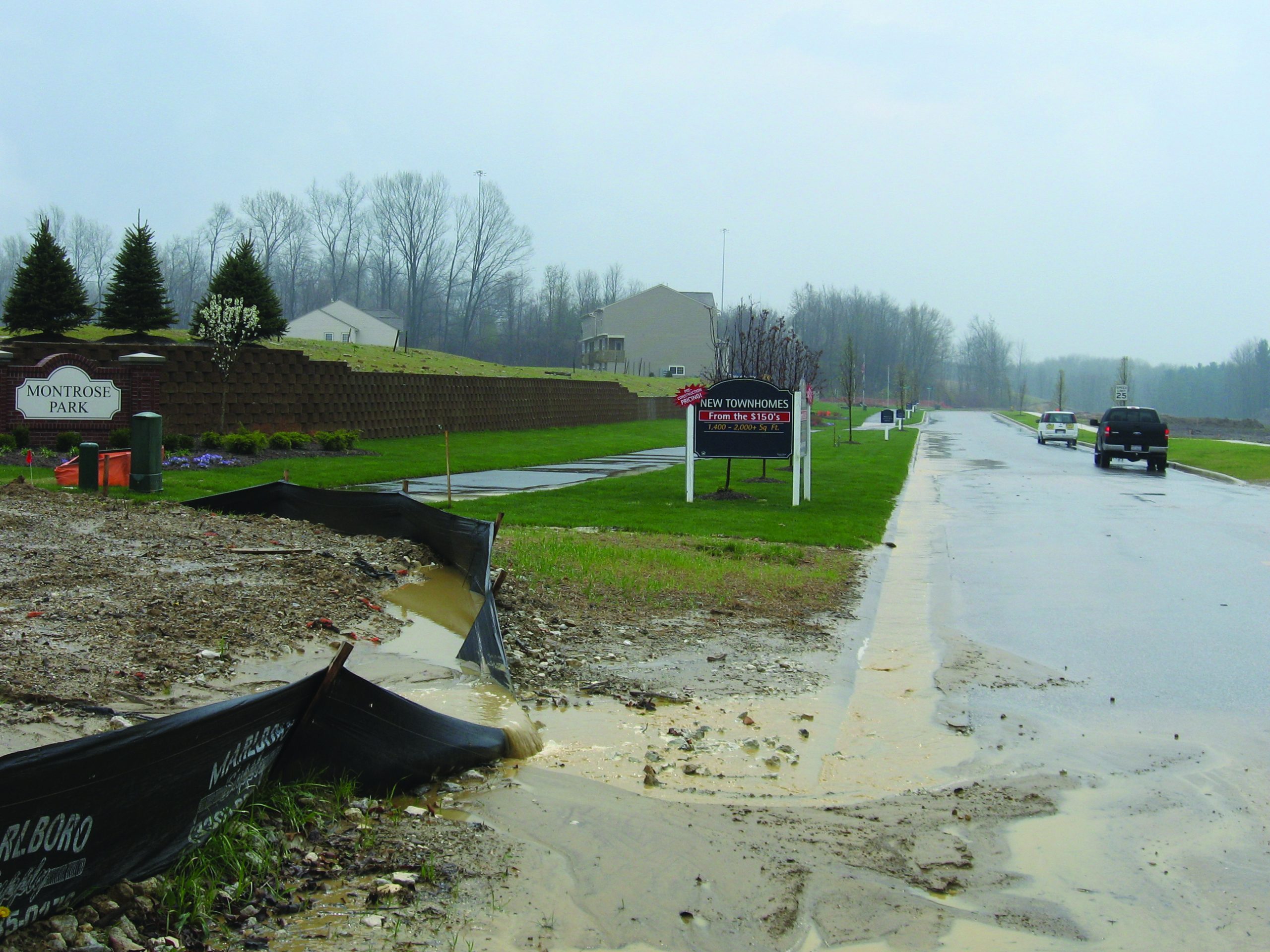
The issue isn’t usually product selection, it’s how erosion control is approached at the site level.
Common breakdowns include:
- Over-reliance on perimeter controls instead of addressing erosion at the source
- Failure to account for slope length, grade, and runoff concentration
- Delays between disturbance and stabilization
- Underestimating rainfall intensity and flow volume
- Treating erosion control as a one-time install rather than an active system requiring adjustment
On paper, these sites are compliant. However, in the field, they’re dealing with recurring maintenance, inconsistent performance, and increased inspection risk.
A More Complete Approach to Erosion Control
High-performing sites treat erosion control as a coordinated system, not a collection of individual BMPs. These sites understand that effective erosion control is built on a combination of approaches that address both soil stabilization and water movement.
These systems typically include:
Slope stabilization – Slopes represent one of the highest-risk areas on any site. Stabilization methods are designed to protect exposed soils from rainfall impact and surface flow until permanent vegetation is established.
Common solutions include:
- Erosion control blankets (ECBs) for immediate surface protection and short-term stabilization
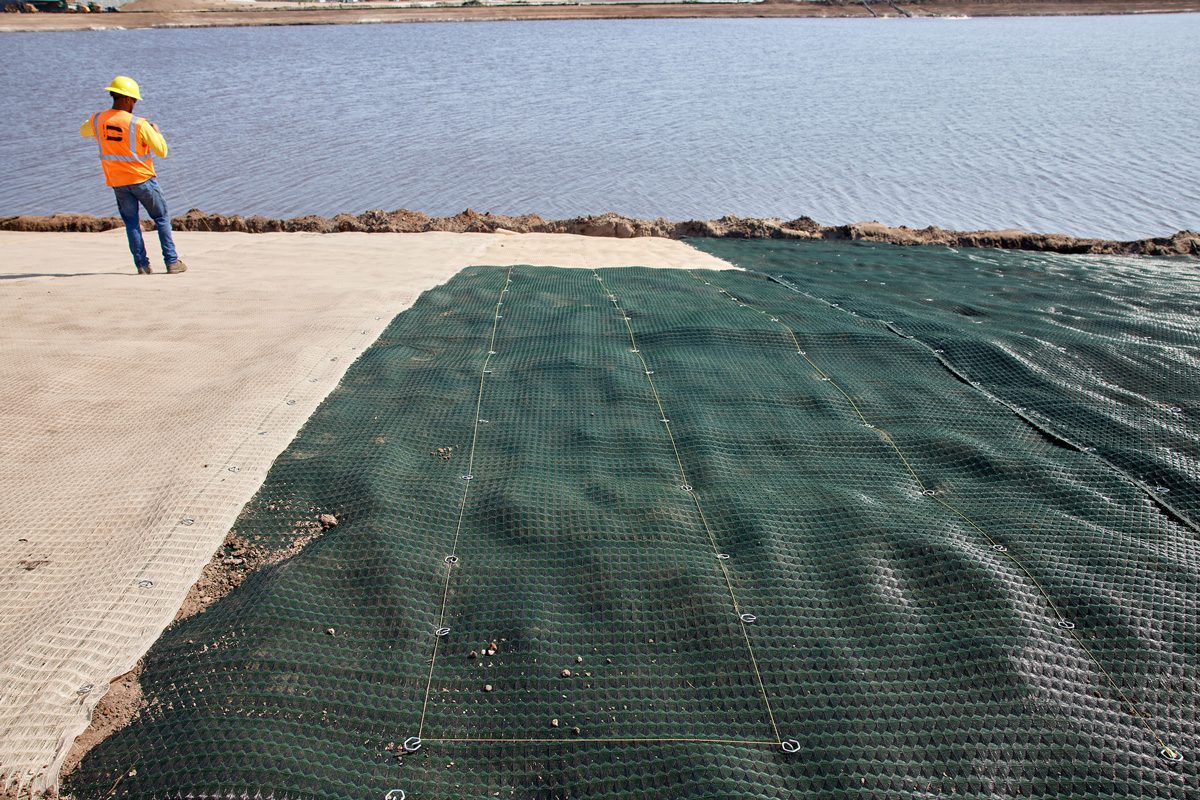
- Turf reinforcement mats (TRMs) for long-term performance in high-flow or high-shear environments
- Geotextiles for separation, filtration, and soil stabilization across a range of site conditions
Properly selected and installed, these systems can reduce surface erosion, maintain soil position, and support uniform vegetation establishment.
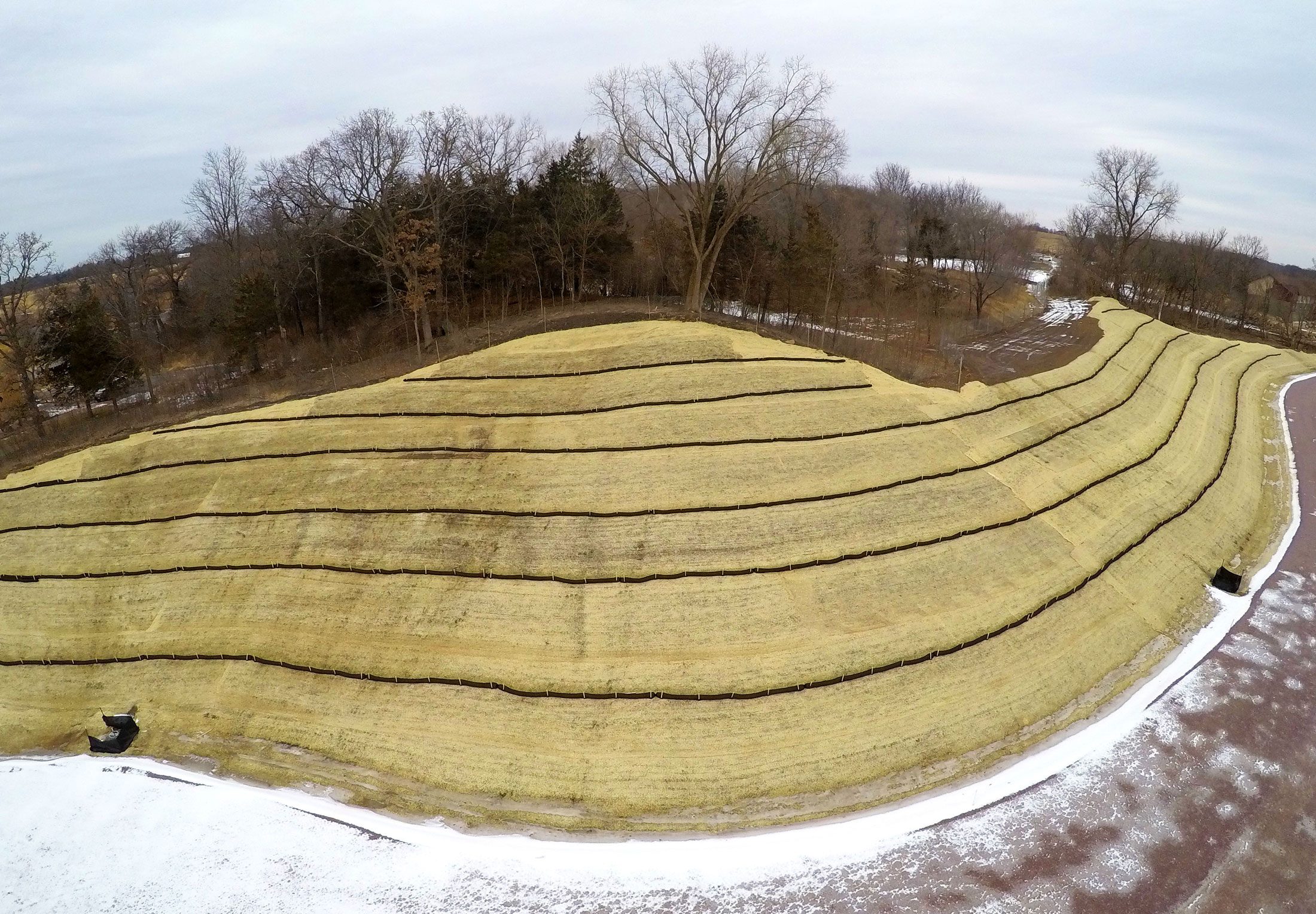
Slope Interruption – Slope interruption addresses the movement of water across the slope, which is the primary driver of erosion. Instead of reinforcing the soil surface, these BMPs are designed to break up runoff flow before it gains enough energy to displace soil.
Slope interruption works by:
- Reducing slope length
- Slowing runoff velocity
- Disrupting concentrated flow paths
- Minimizing the development of rills and gullies
As runoff travels downslope, it accelerates and increases its erosive force. Interrupting that flow at intervals prevents the buildup of energy that leads to soil loss.
Typical slope interruption applications include:
These systems are typically installed along contours and spaced based on slope steepness and site conditions. When properly configured, slope interruption BMPs can significantly reduce erosion by slowing water and trapping sediment before it moves off-site.
Why Both Are Required for Effective Erosion Control
Slope stabilization and slope interruption serve different functions but they are most effective when used together.
- Stabilization protects the soil surface
- Interruption controls the energy of moving water
Relying on one without the other creates gaps in performance:
- Stabilization alone can still fail under concentrated runoff
- Interruption alone doesn’t address exposed or unstable soils
High-performing sites integrate both to:
- Reduce erosion at the source
- Control runoff behavior across the slope
- Improve consistency under variable weather conditions
- Minimize maintenance and compliance risk
Designing an Erosion Control Plan That Performs
Erosion control performance is determined long before installation. It’s set during planning and layout. Strong plans account for how water will actually move across the site, not just where BMPs are placed.
Key considerations include:
- Slope length and grade → longer, steeper slopes increase runoff velocity
- Soil type → sandy soils behave differently than clay under rainfall
- Drainage patterns → identifying where flow will concentrate
- Phasing of disturbance → limiting exposed areas at any given time
- Timing of stabilization → aligning installation with construction activity
Effective plans don’t rely on a single control. Instead, they layer stabilization, interruption, and runoff management based on site conditions.
Matching Erosion Control Methods to Site Conditions
No single approach works across every site. Performance depends on selecting the right solution for the conditions in play.
Low-Slope / Low-Flow Areas
- Hydraulic mulch or temporary seeding
- Light stabilization measures
- Minimal interruption required
Moderate Slopes / Active Drainage
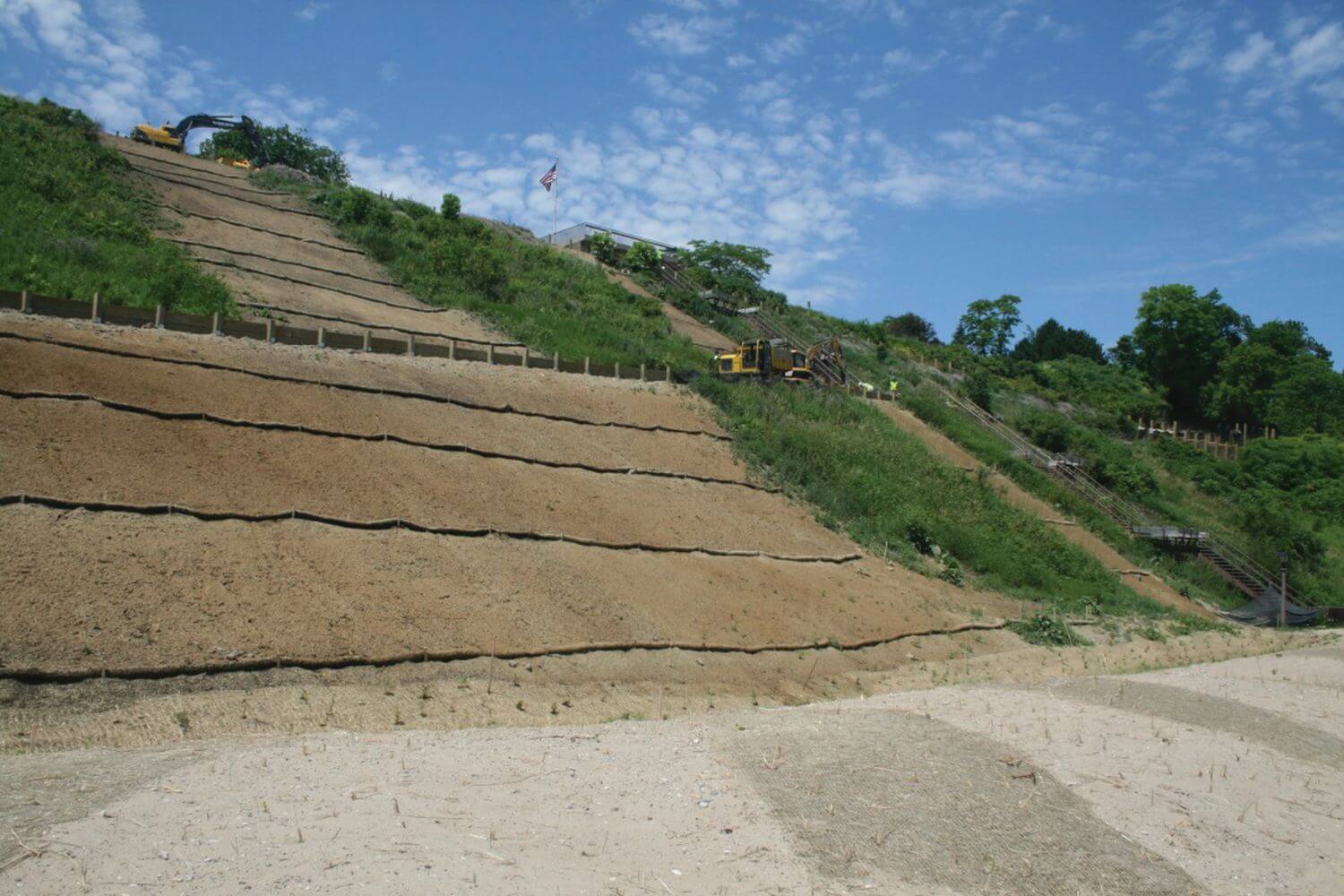
- Erosion control blankets (ECBs)
- Compost filter socks for slope interruption
- Targeted runoff diversion
Steep Slopes / High-Flow Conditions
- Turf reinforcement mats (TRMs)
- Geotextiles for added stability
- Closely spaced slope interruption systems
- Engineered runoff controls
Matching the system to the environment reduces failure risk and improves long-term performance.
Common Failure Points to Avoid
Most erosion control failures aren’t random. They follow predictable patterns.
Frequent issues include:
- Installing stabilization measures too late
- Leaving slopes exposed ahead of forecasted rain events
- Allowing runoff to concentrate without interruption
- Inconsistent installation across crews or phases
- Treating erosion control as a compliance task instead of a performance system
These failures typically lead to:
- Rework and added labor
- Increased material costs
- Delays tied to inspection issues
- Greater downstream impact
Avoiding them comes down to planning, sequencing, and execution.
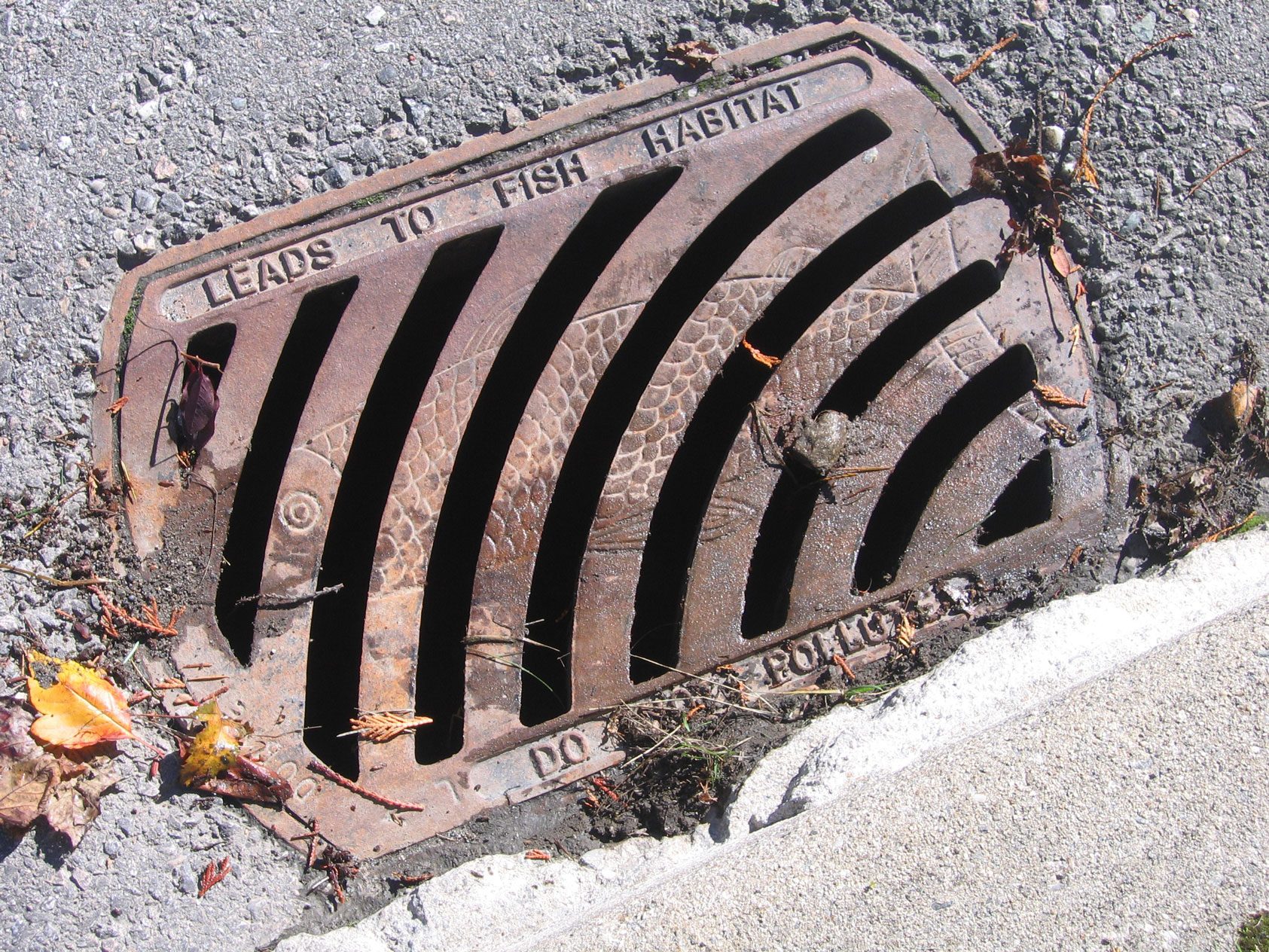
Where Erosion Control Fits in Overall Stormwater Management
Erosion control is not a standalone practice, it’s the front end of the stormwater management system.
Its primary function is to reduce the volume of sediment and pollutants entering downstream controls. When erosion is managed effectively at the source, every other BMP on the site performs more consistently and with less maintenance.
On high-performing sites, erosion control is integrated with:
- Sediment control
Downstream measures designed to capture material that does move. Their effectiveness is directly tied to how much sediment is generated upstream. - Stormwater filtration systems
Technologies that target finer particles and pollutants. These systems are more efficient and longer-lasting when upstream erosion is minimized. - Inlet protection
Critical for preventing sediment and debris from entering storm drain systems. Reduced erosion lowers the load on these controls and decreases the risk of clogging or failure. - Green infrastructure and biofiltration
Systems such as bioswales, vegetated channels, and other treatment approaches rely on controlled flow and manageable sediment loads to function as designed.
From a system perspective, erosion control sets the baseline conditions for everything that follows. Without it, downstream BMPs are forced to compensate, often beyond their intended capacity. The objective is not just to keep soil in place, it’s to manage runoff quality and system performance across the entire site.
This integrated approach is becoming more important as:
- Regulatory expectations shift toward performance-based outcomes
Inspections increasingly focus on how systems function under real conditions, not just whether BMPs are installed. - Projects operate under tighter oversight and documentation requirements
Inconsistent erosion control can lead to repeat deficiencies, added reporting, and increased scrutiny. - Long-term environmental performance becomes a design priority
Owners, developers, and agencies are placing greater emphasis on water quality, durability, and lifecycle performance, not just initial compliance. - Maintenance and lifecycle costs are more closely evaluated
Poor upstream control drives higher costs downstream, from sediment removal to BMP replacement and labor.
Connect with MKB today
In practice, strong erosion control reduces system stress, improves reliability, and creates a more predictable path to compliance, especially on complex or high-risk sites. If you’re evaluating your current erosion control approach, there may be opportunities to improve performance across your site, starting at the source.
MKB works with contractors, engineers, and developers to design and implement erosion control strategies that align with real-world site conditions, regulatory requirements, and long-term performance goals.
Connect with MKB today to review your project conditions and identify a more effective erosion control approach before issues show up in the field.