

Selecting the appropriate rolled erosion control product is not simply a matter of preference. It is a decision that directly impacts project performance, compliance, and lifecycle cost. Within this category, two primary solutions dominate: erosion control blankets (ECBs) and turf reinforcement mats (TRMs). While both are designed to stabilize soil and promote vegetation growth, they differ fundamentally in material composition, functional longevity, and performance under hydraulic stress.
Making the correct selection requires more than understanding the products themselves; it demands a careful assessment of site-specific conditions, including slope geometry, anticipated flow velocities, vegetation establishment timelines, and governing specification requirements. The distinction between temporary stabilization and permanent reinforcement is critical, and aligning product capabilities with project objectives is essential for achieving reliable, compliant, and cost-effective erosion control.
Register for a Virtual Lunch & Learn Session
Deepen your understanding of inlet protection and explore the latest trends and innovations in the field. During this session industry experts will share valuable insights, practical tips, and real-world case studies.
Earn 1 PDH Credit.
What They Are
Erosion Control Blankets
Erosion control blankets are temporary, degradable mats designed to protect bare soil while vegetation takes root. They are typically made with straw, excelsior, or coconut (coir) fibers stitched between layers of biodegradable or photodegradable netting. The blanket protects soil from rainfall impact and sheet flow, holds seed in place, and provides a stable environment for germination. Depending on the material, service life ranges from 90 days to about three years. For example, MKB’s straw blankets such as ETRS-1 provide protection for up to 12 months, while coir products like ETC-100 can function for 36 months in higher-stress conditions
Turf Reinforcement Mats
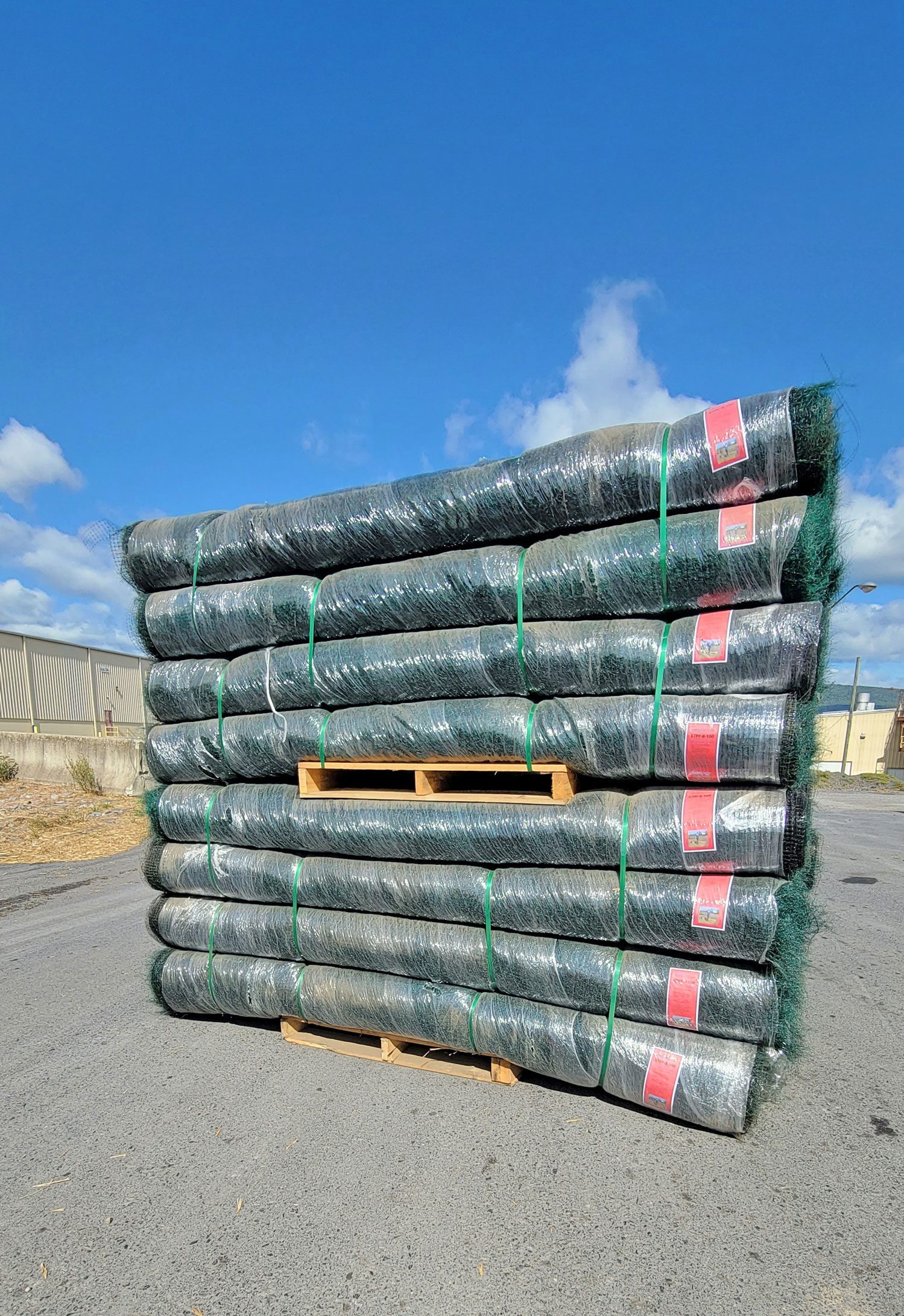
Turf reinforcement mats, by contrast, are permanent solutions. Manufactured from UV-stabilized synthetic fibers or composites, TRMs are designed to last the life of the project. Their role is not only to protect soil but also to reinforce vegetation once established. By interlocking with root systems, TRMs provide the structural strength necessary to withstand high hydraulic forces. On sites such as channels, culvert outlets, streambanks, or steep slopes, they serve as a long-term replacement for riprap or concrete. Certain TRMs, like MKB’s ETPP-10, have permissible vegetated shear stress ratings of up to 13 lbs/ft², making them suitable for severe hydraulic conditions.
Side-by-Side Comparison
| Factor | Erosion Control Blankets | Turf Reinforcement Mats |
| Material | Straw, coir, excelsior; jute or polypropylene nets | UV-stabilized synthetic fibers, geogrids, composites |
| Longevity | Short-Term: 90 days – 12 months (ETRS-1, ETRS-2, ETX-1, etc.)
Extended-Term: 24–36 months (ETSC-7030, ETC-100) |
Permanent; designed for slopes, channels, and shorelines (ETPP-8, ETPP-10, ETPP-12) |
| Applications | 4:1–2:1 slopes, low-to-medium flow channels | 1:1+ slopes, high flow channels, streambanks, shorelines |
| Permissible Shear Stress | 2.0–2.5 lbs/ft² typical | Up to 13 lbs/ft² (vegetated) |
| Function | Protect soil and seed until vegetation establishes; blanket degrades | Reinforce vegetation to resist storm flows and shear |
| Cost Profile | Lower upfront, suited for acreage seeding or DOT slope cover | Higher upfront, but long-term replacement for riprap or concrete |
| FHWA / ECTC Category | Categories 1–4 (ECBs by fiber/netting type) | Categories 5A–5C (TRMs for permanent reinforcement) |
Key Differences in Application
The choice between a blanket and a TRM largely depends on slope steepness, flow velocity, and project duration. Blankets are appropriate for gentle to moderate slopes and low to medium flow channels, where the goal is to protect soil for one or two growing seasons until vegetation can stabilize the slope on its own. In DOT roadside applications or temporary construction seeding, straw or straw/coconut blankets are both economical and effective.
TRMs, on the other hand, are the product of choice when conditions demand permanent reinforcement. Steep slopes steeper than 2:1, channels with repeated storm flows, and shorelines subject to scour require the strength of synthetic reinforcement. Unlike blankets, which degrade as vegetation matures, TRMs remain in place, forming a reinforced matrix that locks in the root zone and provides stability for decades.
Installation and Best Practices
Regardless of whether you are installing a blanket or a TRM, proper installation is critical to performance. Both require careful seedbed preparation, including smooth grading and seeding prior to mat placement. Anchor trenches at the upslope edge or at channel inlets are essential to prevent undercutting. Overlaps must be shingled downslope or downstream, and fastening density should follow MKB guidelines. After installation, sites should be inspected following storm events to repair displaced sections or undermined edges.

Cost and Lifecycle
While erosion control blankets typically offer a lower initial cost, making them an attractive option for large disturbed areas or temporary stabilization measures, their limited functional life often restricts their suitability for projects requiring long-term protection. Once the blanket degrades, additional stabilization may be needed, increasing the risk of rework or replacement.
Turf reinforcement mats, by contrast, represent a higher upfront investment but deliver substantial lifecycle cost savings. By eliminating the need for repeated blanket installations or reliance on riprap, TRMs provide durable, permanent performance that extends well beyond initial construction. In high-flow channels, steep slopes, and permanent BMP installations, TRMs not only deliver cost efficiency over time but also preserve a natural, vegetated aesthetic, which is a benefit increasingly valued in both regulatory and community-driven project outcomes.
Avoiding Common Mistakes
Premature failure in erosion control systems is most often the result of misapplication or improper installation. One of the most common errors occurs when erosion control blankets are specified in channels that generate flows exceeding the product’s rated shear stress capacity. In these conditions, blankets will inevitably underperform and may fail after the first significant storm event.
Other recurring deficiencies include insufficient staple density, omission of anchor trenches, and product selection that does not align with site conditions. For example, deploying a degradable blanket on a high-stress slope or channel that clearly requires a permanent turf reinforcement mat exposes the project to costly rework, compliance risks, and performance shortfalls.
To ensure long-term stability and regulatory compliance, product selection must be grounded in a careful evaluation of site hydraulics, slope geometry, vegetation establishment timelines, and governing specification categories. Matching these parameters to verified product performance data is essential for achieving durable, cost-effective erosion control outcomes.
Choosing with Confidence
The selection between an erosion control blanket and a turf reinforcement mat should be driven by a clear understanding of site forces, hydraulic conditions, and performance objectives. On mild slopes where the goal is short-term stabilization during vegetation establishment, a straw or coir blanket provides reliable and cost-effective protection. However, in environments subject to sustained hydraulic stress, steep grades, or where long-term protection is required, a TRM offers the proven durability and structural reinforcement that temporary blankets cannot deliver.
MKB Company is proud to offer a complete portfolio of solutions, from short-duration straw blankets to permanent, synthetic TRMs, backed by independently verified test data and a proven track record of field performance. Our technical team works closely with contractors, engineers, and municipal agencies to ensure product selection aligns with project specifications, regulatory requirements, and long-term performance goals.
For guidance on matching erosion control products to your project conditions, contact MKB for a site-specific recommendation.