

As temperatures drop and vegetation goes dormant, job sites face one of the toughest erosion control challenges of the year: keeping disturbed soil in place when nothing’s growing to hold it. Frozen ground, snowmelt, and unpredictable winter storms can quickly turn bare slopes into compliance risks. That’s why an erosion control blanket (ECB) is more than just a BMP — it’s your insurance policy for winter stability.
At MKB, we’ve seen how projects that stay protected through the cold months recover faster in spring, save money on rework, and stay compliant year-round. Here’s why erosion control blankets should be part of every winter plan, and how to make them work effectively.
Register for a Virtual Lunch & Learn Session
Deepen your understanding of inlet protection and explore the latest trends and innovations in the field. During this session industry experts will share valuable insights, practical tips, and real-world case studies.
Earn 1 PDH Credit.
Why Winter Makes Erosion Control Harder
When soil freezes, infiltration drops dramatically. That means rain, sleet, or snowmelt runs over the surface instead of soaking in, often carrying sediment, seed, and topsoil with it. Because vegetation isn’t actively growing, the site loses its natural protection.
Contractors who rely only on seeding in late fall often find that seed never germinates, leaving slopes unprotected until spring. Without a protective cover, one thaw cycle or heavy storm can undo weeks of grading work.
An erosion control blanket provides an immediate barrier against these seasonal risks, locking soil and seed in place until conditions improve.
Why Erosion Control Blankets Excel in Cold Weather
Erosion control blankets outperform most temporary stabilization methods during winter for three simple reasons:
1. Physical Protection When Vegetation Can’t Help
Blankets act as a durable shield over exposed soil, absorbing the impact of rainfall, snow, and freeze–thaw cycles. They prevent surface crusting and washouts — keeping seed, fertilizer, and soil intact through the dormant season.
2. Moisture Retention for Spring Growth
When temperatures rise, the same blanket that protected your slope through winter now helps retain moisture for faster seed germination. That means earlier vegetation, less maintenance, and fewer callbacks in spring.
3. Compatibility With Other BMPs
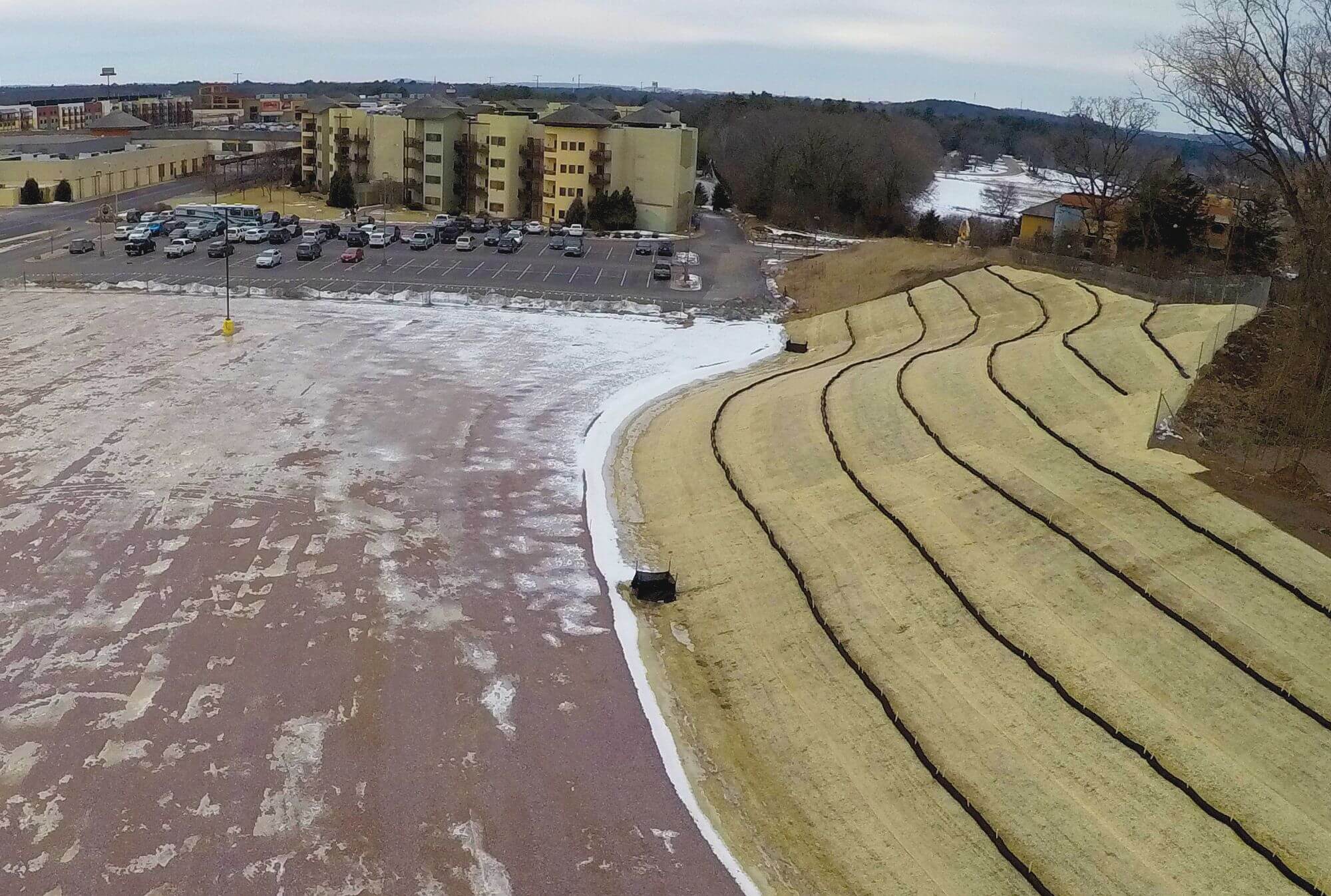
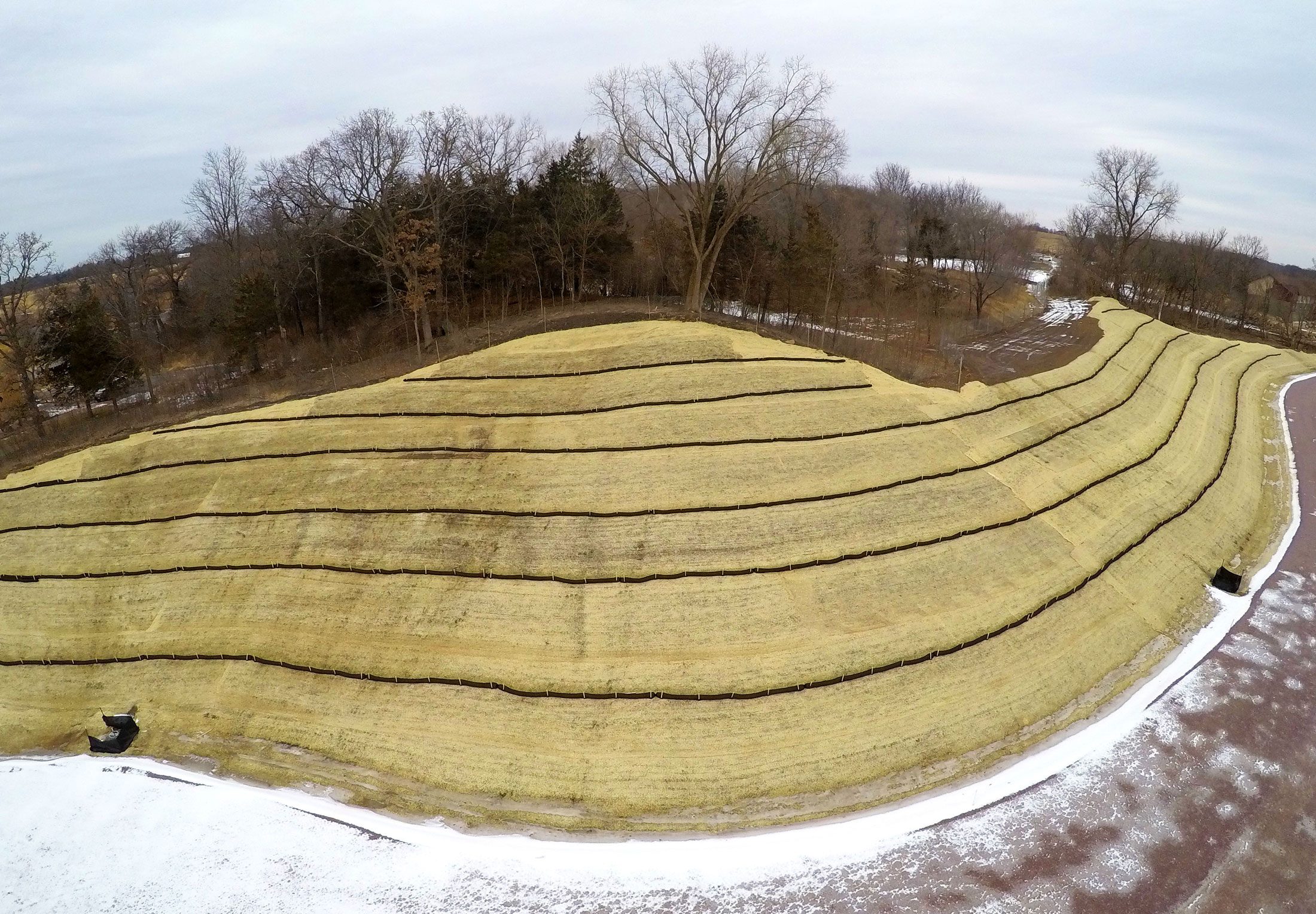
Blankets pair seamlessly with other cold-weather controls to form a complete perimeter and surface stabilization system. While wattles and socks slow runoff and capture sediment, the blanket locks down the surface itself — preventing soil movement before it starts.
Choosing the Right Blanket for Winter Work
Not all erosion control blankets are built for winter conditions. Here’s what to look for:
- Material Composition: For cold or frozen sites, choose denser straw, coconut (coir), or straw/coconut blends that maintain structure through wet and freezing cycles.
- Netting Type: Double-net or reinforced netting provides extra hold on steep or high-flow slopes where freeze–thaw movement is frequent.
- Longevity: A medium- to long-term biodegradable blanket (lasting 12–24 months) ensures protection through winter and into the growing season.
- Installation Timing: Install before the first hard freeze, ensuring good soil contact and secure anchoring so the blanket can flex with the ground rather than lift off it.
MKB’s ErosionTech line includes straw, coir, excelsior, and blended erosion control blankets engineered to perform under challenging cold-weather conditions, helping contractors meet stabilization deadlines even when vegetation won’t cooperate.

Best Practices for Winter Installation
Proper installation is key to performance, especially in cold climates:
- Prepare the Surface: Grade the area smooth and remove debris before the ground freezes.
- Anchor Securely: Trench and staple the top edge at the crest of the slope to prevent undermining from runoff.
- Follow Contours: Lay blankets parallel to water flow, overlapping edges by at least 4–6 inches.
- Inspect After Freeze–Thaw Events: Check for lifting, tears, or undermining and repair promptly to maintain full soil contact.
A well-installed blanket can last through snow, ice, and thaw, providing continuous stabilization and minimizing rework in spring.
The Bottom Line: Protect Now, Save Later
Cold-weather erosion control isn’t just about compliance, it’s about cost control and project efficiency. A properly selected and installed erosion control blanket prevents soil loss, minimizes sediment runoff, and reduces the need for regrading once temperatures warm up.
By pairing ErosionTech blankets with proven BMPs like SiltSoxx or Siltron Silt Fence, contractors can keep sites stable, compliant, and ready for the next phase of work — no matter how harsh the winter gets.
Don’t wait for spring to fix what winter undoes. Contact MKB today for expert guidance and product solutions that protect your site all season long.