

As a new year begins, contractors, inspectors, engineers, and site managers face fresh stormwater compliance expectations. Regulations continue to evolve, winter weather complicates BMP performance, and early-season construction activity places pressure on sediment and erosion control systems.
Whether you’re preparing a SWPPP for a new project or evaluating an active site, this 2026 Stormwater Compliance Checklist helps ensure you’re meeting federal, state, and DOT requirements—while minimizing risk, delays, and costly violations.
Register for a Virtual Lunch & Learn Session
Deepen your understanding of inlet protection and explore the latest trends and innovations in the field. During this session industry experts will share valuable insights, practical tips, and real-world case studies.
Earn 1 PDH Credit.
Why Stormwater Compliance Matters More in 2026
Across the country, regulators are tightening requirements around runoff, sediment discharge, and BMP documentation. Several trends are shaping the 2026 compliance landscape:
- Higher scrutiny of sediment loss during freeze–thaw cycles
- Growing adoption of green infrastructure and organic BMP materials
- Increased DOT specificity around blankets, TRMs, and anchoring systems
- More rigorous SWPPP inspections and documentation expectations
- Greater use of engineered solutions for high-flow and high-risk sites
In other words: Stormwater management is no longer a “set it and forget it” effort.
Contractors must demonstrate ongoing maintenance, proper product selection, and site-specific planning.
2026 Stormwater Compliance Checklist
Use this checklist to prepare your site for Q1 construction and the spring runoff season.
1. Update Your SWPPP for 2026 Requirements
A current and complete SWPPP is required under EPA NPDES regulations. Before work begins:
- Confirm all site maps, drainage paths, and discharge points are updated.
- Review materials, staging areas, and soil disturbance plans.
- Ensure BMPs listed match the BMPs installed.
- Add documentation for winterization and frozen-ground strategies.
- Verify contact info for qualified personnel, inspectors, and subcontractors.
Tip: Many violations occur because the SWPPP doesn’t reflect what’s physically on site. Update early—update often.
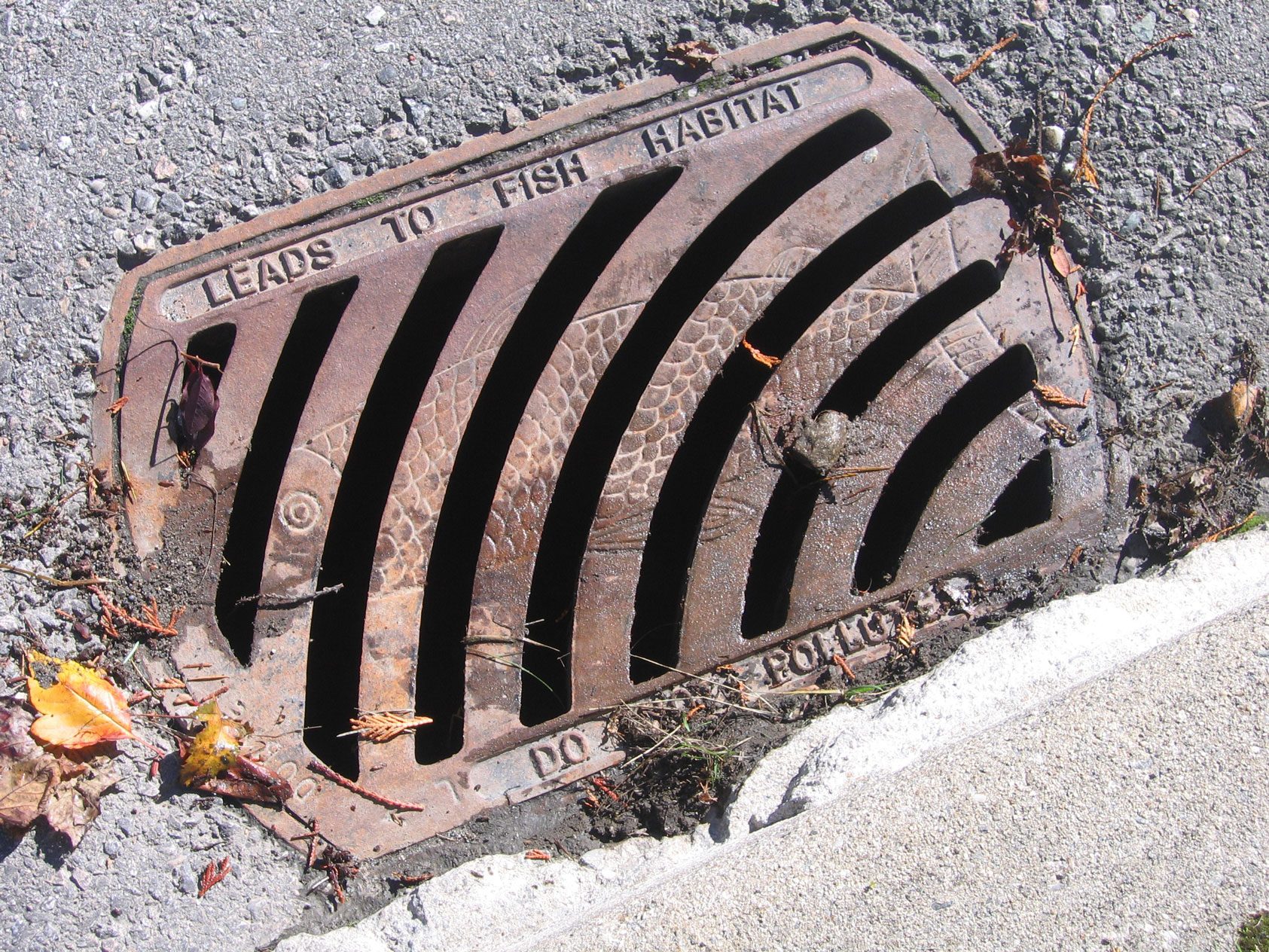
2. Reassess Soil Conditions and Site Vulnerability
Winter dramatically changes how water moves across a jobsite. In January and February, frozen or compacted soils reduce infiltration, increasing both runoff speed and sediment mobility.
Conduct a site vulnerability assessment, checking for:
- Bare or disturbed soil left unprotected
- Areas with concentrated flow or ponding
- Steep slopes needing reinforced protection
- Ditches requiring improved armoring
- Sediment controls showing stress from freeze–thaw cycles
This assessment should drive your BMP selections for early 2026.
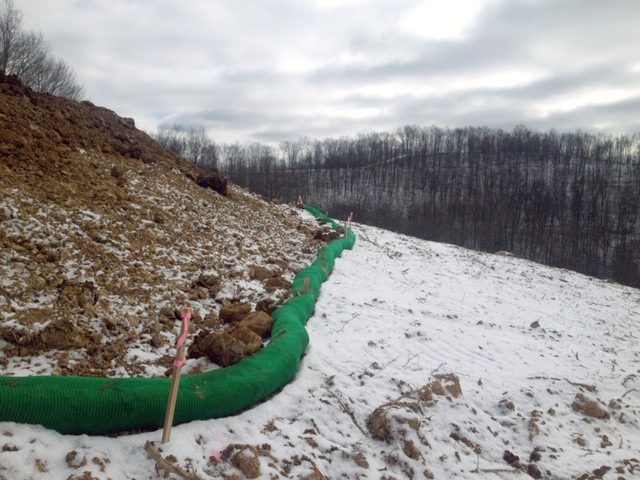
3. Choose BMPs That Perform in Winter and Early Spring
Not all BMPs behave the same in cold conditions. Select stormwater controls proven to perform through snow, ice, and saturated ground.
Recommended Sediment Control BMPs
- SiltSoxx Compost Filter Socks – SiltSoxx is a highly versatile, winter-ready sediment control option. Its compost-filled mesh provides immediate filtration on frozen or compacted ground, installing quickly without trenching—ideal for late-season work. During freeze–thaw cycles, it continues to trap sediment, slow runoff, and conform to uneven terrain where rigid barriers often fail. A reliable stand-alone or supplemental BMP for maintaining compliance through winter.
- SiltSoxxRH– SiltSoxx RH uses clean, processed rice hulls that stay free-draining and flexible, even when temperatures drop. The lightweight fill resists saturation and maintains steady flow-through during snowmelt or rain-on-frozen-ground conditions. Because rice hulls don’t clump or freeze solid, the sock keeps its permeability and helps reduce maintenance throughout the winter.
- Siltron – Siltron is a durable, multi-layer perimeter control option built to hold up when winter conditions challenge standard silt fence. Its reinforced construction provides strong tear resistance and consistent filtration, keeping sediment contained even in frozen or saturated soils. Unlike lighter fabrics that clog or collapse during snowmelt or freeze–thaw cycles, Siltron maintains structure and flow, helping crews stay compliant when access and maintenance are limited. Ideal for sites that need reliable protection through the winter season.
Recommended Erosion Control BMPs
Erosion Control Blankets (ECBs) and Turf Reinforcement Mats (TRMs) provide essential soil stabilization during winter and early spring, when vegetation is dormant and slopes are most vulnerable. Straw, straw-coconut, and coir blankets offer dependable short- to mid-term protection, helping secure loose soil through freeze–thaw cycles and seasonal runoff. Heavier coir options add durability where longer exposure or harsher conditions are expected.
For high-flow channels, steep slopes, or areas needing long-term reinforcement, TRMs deliver added structural stability and maintain performance when winter weather stresses lighter materials. Their engineered design resists uplift, washouts, and undercutting, especially when paired with proper anchoring.
Together, blankets and TRMs help prevent erosion, support vegetation establishment when temperatures rise, and keep sites compliant during the months when soil is most at risk.
Remember:
Winter storms tend to expose weaknesses in installation. Choose materials engineered for the season—not just for ideal conditions.
4. Inspect and Maintain Existing BMPs
Regulators expect consistent documentation that BMPs are working as intended. Begin the year with a site-wide inspection, checking:
- Proper placement and installation
- Degradation from snow, ice, salt, or plowing
- Sediment accumulation behind socks or fencing
- Undermining or washouts
- Torn blankets or displaced staples
- TRMs lifting at edges or seams
Maintenance Checklist
- Replace sediment control devices that are full or deformed
- Re-anchor blankets or mats showing uplift
- Repair gullies, ruts, or channels created over winter
- Remove accumulated sediment before BMPs lose function
- Restore or reinforce areas of disturbed vegetation
A failing BMP is considered non-compliant, even if it was originally installed correctly.
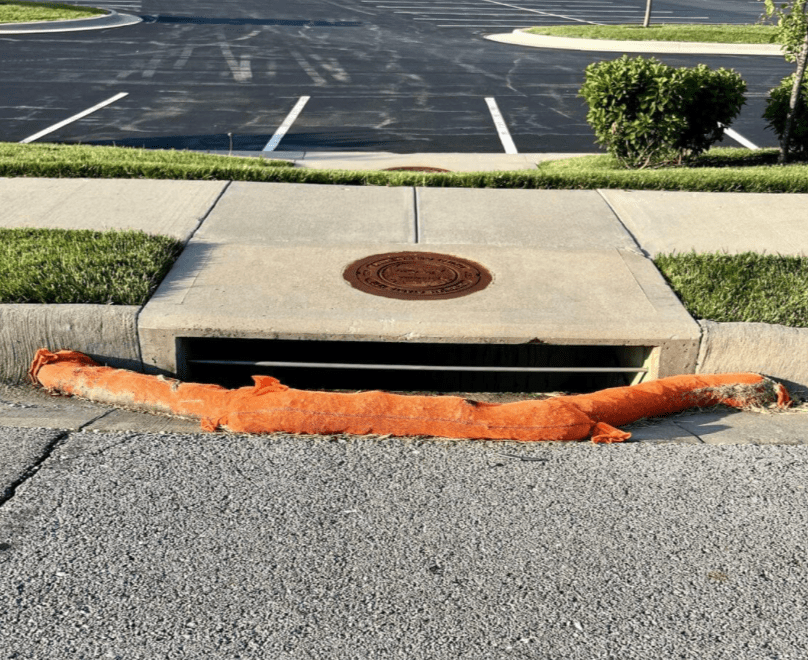
5. Plan for Spring Runoff—Before It Arrives
Early planning prevents March–April storm events from derailing projects.
Key steps include:
- Stocking replacement BMP materials before spring shortages
- Ordering blankets, TRMs, and socks based on 2026 construction phasing
- Mapping additional BMPs needed for thaw conditions
- Updating your SWPPP with spring transition plans
- Ensuring corrective actions from winter inspections are documented and completed
Spring runoff is one of the biggest drivers of sediment loss, so proactive preparation is considered best practice by nearly all regulators.
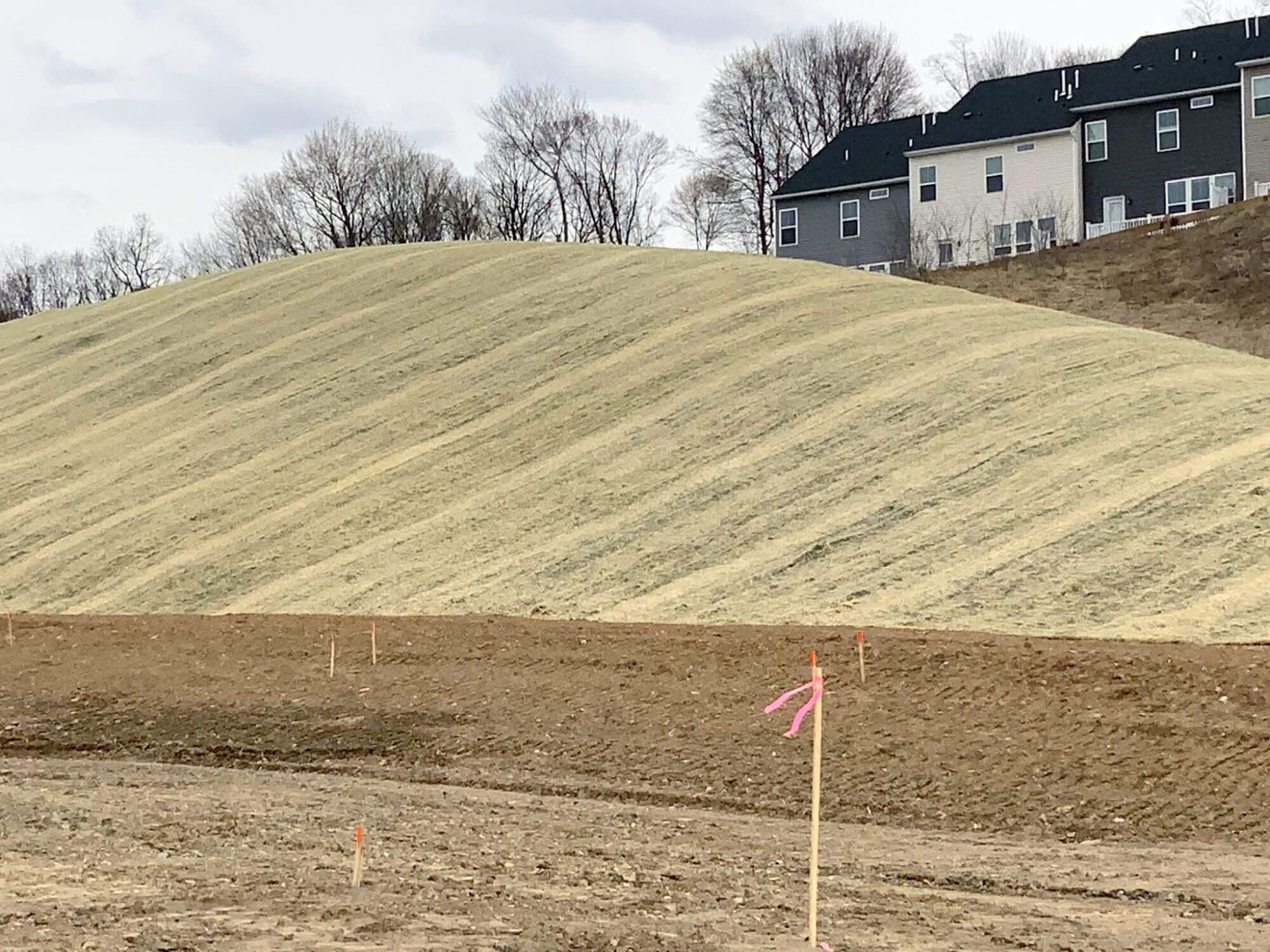
6. Train Your Crew on 2026 Requirements
Human error remains a leading cause of stormwater violations. The start of the year is the ideal moment to:
- Host a toolbox talk on SWPPP expectations
- Review inspection procedures and trigger conditions
- Train new team members on BMP installation
- Standardize documentation and reporting
- Assign roles for winter monitoring and spring transition
- Schedule a Lunch and Learn with the MKB team
Well-trained crews reduce risk more effectively than any single BMP.

Setting Up Your Jobsite for Success in 2026
Stormwater compliance is a year-round commitment, but the work you do in January sets the tone for the entire construction season. By updating your SWPPP, selecting winter-ready BMPs, preparing for spring runoff, and documenting site conditions properly, you not only meet regulatory expectations—you protect waterways, reduce rework, and keep your project moving.
MKB’s nationwide platform of sediment control and erosion control solutions ensures you have access to the right products when you need them—no matter the season.
Need Help Choosing the Right BMPs for 2026?
We can help. MKB offers:
- National distribution
- Fast delivery
- Certified erosion control and sediment control products
- Support for contractors, engineers, and DOT projects
Start the year with confidence—and compliance. Contact Us Today.